Home › Aviation › Stick and Rudder: An Explanation of the Art of Flying

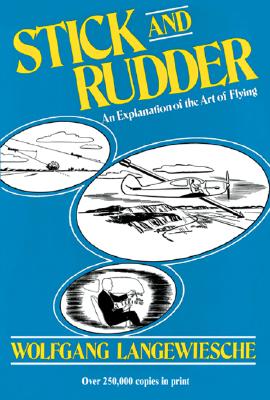
Stick and Rudder: An Explanation of the Art of Flying

by Wolfgang Langewiesche

Understanding the pilot’s role in flight

Regular price $32.97 USD
Regular price $54.95 USD Sale price $32.97 USD
Save 40%

Hardcover New

Delivery to your door
In stock·Dispatches in 1–2 business days
Standard shipping* from $4.35
Standard shipping transit* 5–8 business days after dispatch

Faster options are available.

Rates and delivery estimates depend on your destination and item quantity. Estimates are informational only; the final shipping method and rate are selected at checkout.

Secure checkout
American Express Apple Pay DiscoverGoogle Pay Mastercard PayPalVisa
30-day eligible returns Returns & refunds policy

AlbakiReads Editorial

Understanding the pilot’s role in flight

Wolfgang Langewiesche’s guide organizes the mechanics of flying around the pilot’s practical decisions and observations. It explains angle of attack, lift, stalls, turns, and the distinct roles of elevator, throttle, and rudder, then applies those principles to judging an approach and landing through visual cues. Separate discussions compare tail-dragger and tricycle landing gear, while a chapter by Leighton Collins addresses air accidents and aviation safety. The book’s emphasis is on connecting aerodynamic concepts with the actions involved in operating an aircraft, from interpreting what the airplane is doing to managing its path toward the ground.

Good fit for readers who enjoy

  • Learners seeking explanations of basic flight principles and piloting actions.
  • Experienced pilots and flight instructors interested in a conceptual account of flying.
  • Readers curious about landing approaches, aircraft controls, and landing-gear configurations.

Themes

Aerodynamics and flight controlPiloting judgment and visual cuesLanding and aircraft configurationAviation safety

Based on publisher information and book metadata.

Book overview

Publisher's Note: Products purchased from Third Party sellers are not guaranteed by the publisher for quality, authenticity, or access to any online entitlements included with the product.


WHAT'S IN STICK AND RUDDER:

  • The invisible secret of all heavier-than-air flight: the Angle of Attack. What it is, and why it can't be seen. How lift is made, and what the pilot has to do with it.
  • Why airplanes stall How do you know you're about to stall?
  • The landing approach. How the pilot's eye functions in judging the approach.
  • The visual clues by which an experienced pilot unconsciously judges: how you can quickly learn to use them.
  • "The Spot that does not move." This is the first statement of this phenomenon. A foolproof method of making a landing approach across pole lines and trees.
  • The elevator and the throttle. One controls the speed, the other controls climb and descent. Which is which?
  • The paradox of the glide. By pointing the nose down less steeply, you descend more steeply. By pointing the nose down more steeply, you can glide further.
  • What's the rudder for? The rudder does NOT turn the airplane the way a boat's rudder turns the boat. Then what does it do?
  • How a turn is flown. The role of ailerons, rudder, and elevator in making a turn.
  • The landing--how it's made. The visual clues that tell you where the ground is.
  • The "tail-dragger" landing gear and what's tricky about it. This is probably the only analysis of tail-draggers now available to those who want to fly one.
  • The tricycle landing gear and what's so good about it. A strong advocacy of the tricycle gear written at a time when almost all civil airplanes were taildraggers.
  • Why the airplane doesn't feel the wind.
  • Why the airplane usually flies a little sidewise.
  • Plus: a chapter on Air Accidents by Leighton Collins, founder and editor of AIR FACTS. His analyses of aviation's safety problems have deeply influenced pilots and aeronautical engineers and have contributed to the benign characteristics of today's airplane.

Stick and Rudder is the first exact analysis of the art of flying ever attempted. It has been continously in print for thirty-three years. It shows precisely what the pilot does when he flies, just how he does it, and why.

Because the basics are largely unchanging, the book therefore is applicable to large airplanes and small, old airplanes and new, and is of interest not only to the learner but also to the accomplished pilot and to the instructor himself.

When Stick and Rudder first came out, some of its contents were considered highly controversial. In recent years its formulations have become widely accepted. Pilots and flight instructors have found that the book works.

Today several excellent manuals offer the pilot accurate and valuable technical information. But Stick and Rudder remains the leading think-book on the art of flying. One thorough reading of it is the equivalent of many hours of practice.

Shipping & returnsShipping options, delivery timing, and our return policy.

In-stock items normally dispatch within 1–2 business days. The ZIP-code estimator on this page is informational only; the final shipping method, price, and availability are confirmed at checkout for your full order.

For the initial delivery estimate we use these transit windows after dispatch: Standard 5–8 business days, Expedited 2–4 business days, and Priority 1–2 business days. Holiday delays are not included.

Eligible items can be returned within 30 days in accordance with our return policy.

Customer reviews