


Book overview
How marketers learned to dream of optimization and speak in the idiom of management science well before the widespread use of the Internet.
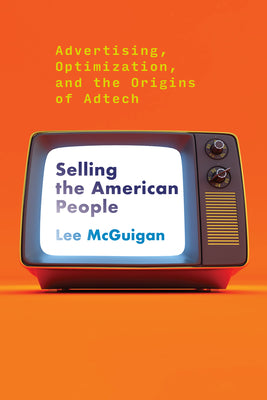
Algorithms, data extraction, digital marketers monetizing "eyeballs" these all seem like such recent features of our lives. And yet, Lee McGuigan tells us in this eye-opening book, digital advertising was well underway before the widespread use of the Internet. Explaining how marketers have brandished the tools of automation and management science to exploit new profit opportunities, Selling the American People traces data-driven surveillance all the way back to the 1950s, when the computerization of the advertising business began to blend science, technology, and calculative cultures in an ideology of optimization. With that ideology came adtech, a major infrastructure of digital capitalism.
To help make sense of today's attention merchants and choice architects, McGuigan explores a few key questions: How did technical experts working at the intersection of data processing and management sciences come to command the center of gravity in the advertising and media industries? How did their ambition to remake marketing through mathematical optimization shape and reflect developments in digital technology? In short, where did adtech come from, and how did data-driven marketing come to mediate the daily encounters of people, products, and public spheres? His answers show how the advertising industry's efforts to bend information technologies toward its dream of efficiency and rational management helped to make "surveillance capitalism" one of the defining experiences of public life.


