


Book overview
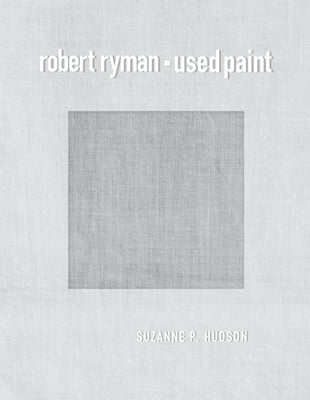
This first book-length study of Robert Ryman argues that his work is a continuous experiment in the possibilities of painting.
In this first book-length study of Robert Ryman, Suzanne Hudson traces the artist's production from his first paintings in the early 1950s, many of which have never been exhibited or reproduced, to his recent gallery shows. Ryman's largely white-on-white paintings represent his careful working over of painting's conventions at their most radically reduced. Through close readings of the work, Hudson casts Ryman as a painter for whom painting was conducted as a continuous personal investigation. Ryman's method--an act of "learning by doing"--as well as his conception of painting as "used paint" sets him apart from second-generation abstract expressionists, minimalists, or conceptualists.
Ryman (born in 1930) is a self-taught artist who began to paint in earnest while working as a guard at the Museum of Modern Art in New York in the 1950s. Hudson argues that Ryman's approach to painting developed from quotidian contact with the story of modern painting as assembled by MoMA director and curator Alfred Barr and rendered widely accessible by director of the education department Victor D'Amico and colleagues. Ryman's introduction to artistic practice within the (white) walls of MoMA, Hudson contends, was shaped by an institutional ethos of experiential learning. (Others who worked at the MoMA during these years include Lucy Lippard, who married Ryman in 1961; Dan Flavin, another guard; and Sol LeWitt, a desk assistant.)
Hudson's chapters--"Primer," "Paint," "Support," "Edge," and "Wall," named after the most basic elements of the artist's work--eloquently explore Ryman's ongoing experiment in what makes a painting a painting. Ryman's work, she writes, tests the medium's material and conceptual possibilities. It signals neither the end of painting nor guarantees its continued longevity but keeps the prospect of painting an open question, answerable only through the production of new paintings.


