Home › History › Mechanical Sound: Technology, Culture, and Public Problems of Noise in the Twentieth Century

Mechanical Sound: Technology, Culture, and Public Problems of Noise in the Twentieth Century

by Karin Bijsterveld

How technological noise became a public problem

Regular price $61.02 USD
Regular price $61.02 USD Sale price $61.02 USD

Paperback New English

Delivery to your door
In stock·Dispatches in 1–2 business days
Standard shipping* from $4.35
Standard shipping transit* 5–8 business days after dispatch

Faster options are available.

Rates and delivery estimates depend on your destination and item quantity. Estimates are informational only; the final shipping method and rate are selected at checkout.

Secure checkout
American Express Apple Pay DiscoverGoogle Pay Mastercard PayPalVisa
30-day eligible returns Returns & refunds policy

AlbakiReads Editorial

How technological noise became a public problem

Karin Bijsterveld charts a century of disputes over mechanical sound in Europe and the United States, from factories and traffic to domestic playback devices and aircraft. Organized around four historical episodes between 1875 and 1975, the book connects public complaints, anti-noise campaigns, regulation, and legislation with an opposing modernist celebration of machine-made sound. Its central idea, the “paradox of control,” examines how technical expertise and public policy addressed certain sounds while assigning others to private citizens and neighborhood life. Attention to maps, zones, and sound’s ability to travel across boundaries frames noise as a continuing cultural and political issue, not simply an engineering nuisance.

Good fit for readers who enjoy

  • Readers interested in the history of technology and industrial society
  • Students of sound studies, urban history, or public policy
  • Those exploring debates over regulation, expertise, and everyday environments

Themes

Noise regulationTechnology and public lifeUrban and industrial soundSound studiesExpertise and citizenship

Based on publisher information and book metadata.

Book overview

Tracing efforts to control unwanted sound--the noise of industry, city traffic, gramophones and radios, and aircraft--from the late nineteenth to the late twentieth century.

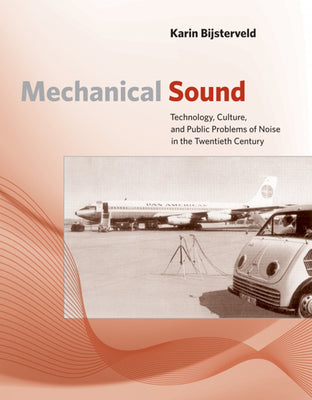
Since the late nineteenth century, the sounds of technology have been the subject of complaints, regulation, and legislation. By the early 1900s, antinoise leagues in Western Europe and North America had formed to fight noise from factories, steam trains, automobiles, and gramophones, with campaigns featuring conferences, exhibitions, and "silence weeks." And, as Karin Bijsterveld points out in Mechanical Sound, public discussion of noise has never died down and continues today. In this book, Bijsterveld examines the persistence of noise on the public agenda, looking at four episodes of noise and the public response to it in Europe and the United States between 1875 and 1975: industrial noise, traffic noise, noise from neighborhood radios and gramophones, and aircraft noise. She also looks at a twentieth-century counterpoint to complaints about noise: the celebration of mechanical sound in avant-garde music composed between the two world wars. Bijsterveld argues that the rise of noise from new technology combined with overlapping noise regulations created what she calls a "paradox of control." Experts and politicians promised to control some noise, but left other noise problems up to citizens. Aircraft noise, for example, measured in formulas understandable only by specialists, was subject to public regulation; the sounds of noisy neighborhoods were the responsibility of residents themselves. In addition, Bijsterveld notes, the spatial character of anti-noise interventions that impose zones and draw maps, despite the ability of sound to cross borders and boundaries, has helped keep noise a public problem. We have tried to create islands of silence, she writes, yet we have left a sea of sounds to be fiercely discussed.

Shipping & returnsShipping options, delivery timing, and our return policy.

In-stock items normally dispatch within 1–2 business days. The ZIP-code estimator on this page is informational only; the final shipping method, price, and availability are confirmed at checkout for your full order.

For the initial delivery estimate we use these transit windows after dispatch: Standard 5–8 business days, Expedited 2–4 business days, and Priority 1–2 business days. Holiday delays are not included.

Eligible items can be returned within 30 days in accordance with our return policy.

Customer reviews