Home › Applied › Introduction to Chaos, Fractals and Dynamical Systems

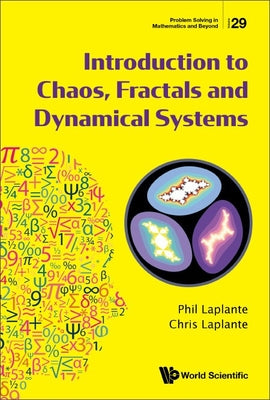
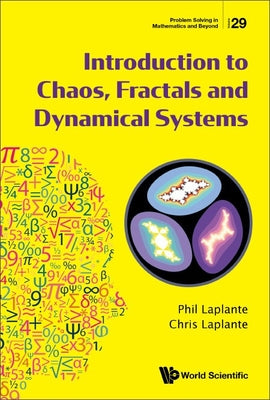
Introduction to Chaos, Fractals and Dynamical Systems

by Laplante Phil

A practical introduction to mathematical patterns and change

Regular price $44.73 USD
Regular price $49.70 USD Sale price $44.73 USD
Save 10%

Paperback New English

Delivery to your door
In stock·Dispatches in 1–2 business days
Standard shipping* from $4.35
Standard shipping transit* 5–8 business days after dispatch

Faster options are available.

Rates and delivery estimates depend on your destination and item quantity. Estimates are informational only; the final shipping method and rate are selected at checkout.

Secure checkout
American Express Apple Pay DiscoverGoogle Pay Mastercard PayPalVisa
30-day eligible returns Returns & refunds policy

AlbakiReads Editorial

A practical introduction to mathematical patterns and change

Chaos theory, fractals and dynamical systems are introduced through natural and human phenomena, everyday examples, computer-generated graphics and photographs. The book connects these subjects to applications including image compression, while tracing the history of the ideas and introducing some of the scientists, mathematicians and engineers associated with their development. Mathematical definitions and explanations are paired with chapter exercises and activities, from computational tasks to computer projects and research assignments. The mix of conceptual introductions, visual examples and hands-on work gives the book a clear role as a structured resource for studying these connected areas of applied mathematics.

Good fit for readers who enjoy

  • Homeschooling families seeking a focused course on chaos, fractals or dynamical systems
  • Teachers looking for a classroom supplement for mathematics, computer programming or graphics courses
  • Undergraduates outside science seeking an introduction to these mathematical topics

Themes

Chaos theoryFractals in nature and human phenomenaDynamical systemsComputer graphics and image compressionHistory of mathematics and science

Based on publisher information and book metadata.

Book overview

This book offers a fun and enriching introduction to chaos theory, fractals and dynamical systems, and on the applications of fractals to computer generated graphics and image compression. Introduction to Chaos, Fractals and Dynamical Systems particularly focuses on natural and human phenomenon that can be modeled as fractals, using simple examples to explain the theory of chaos and how it affects all of us. Then, using straightforward mathematic and intuitive descriptions, computer generated graphics and photographs of natural scenes are used to illustrate the beauty of fractals and their importance in our world. Finally, the concept of Dynamical Systems, that is, time-dependent systems, the foundation of Chaos and

Fractal, is introduced. Everyday examples are again used to illustrate concepts, and the importance of understanding how these vital systems affect our lives. Throughout the fascinating history of the evolution of chaos theory, fractals and dynamical systems is presented, along with brief introductions to the scientists, mathematicians and engineers who created this knowledge.


Introduction to Chaos, Fractals and Dynamical Systems contains ample mathematical definitions, representations, discussions and exercises, so that this book can be used as primary or secondary source in home schooling environments.


The book is suitable for homeschooling as a focused course on the subject matter or as a classroom supplement for a variety of courses at the late junior high or early high-school level. For example, in addition to a standalone course on Chaos, Fractals and Dynamical Systems (or similar title), this book could be used with the following courses:

  • Precalculus
  • Geometry
  • Computer programming (e.g. Rust, C, C++, Python, Java, Pascal)
  • Computer graphics


The text can also be used in conjunction with mathematics courses for undergraduates for non-science majors. The book can also be used for informal and lively family study and discussion.


For each chapter, exercises and things to do are included. These activities range from simple computational tasks to more elaborate computer projects, related activities, biographical research and writing assignments.

Shipping & returnsShipping options, delivery timing, and our return policy.

In-stock items normally dispatch within 1–2 business days. The ZIP-code estimator on this page is informational only; the final shipping method, price, and availability are confirmed at checkout for your full order.

For the initial delivery estimate we use these transit windows after dispatch: Standard 5–8 business days, Expedited 2–4 business days, and Priority 1–2 business days. Holiday delays are not included.

Eligible items can be returned within 30 days in accordance with our return policy.

Customer reviews