Home › Applied › Fractional Calcu: Model & Numeric Method

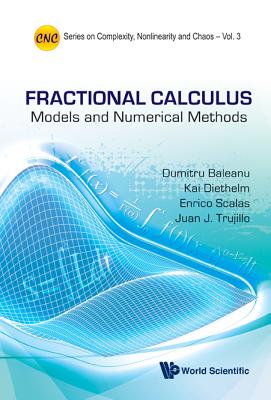
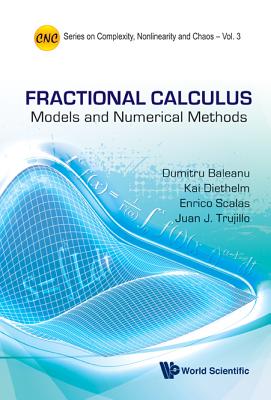
Fractional Calcu: Model & Numeric Method

by Baleanu Dumitru

Fractional calculus across models and applications

Regular price $165.54 USD
Regular price $183.94 USD Sale price $165.54 USD
Save 10%

Hardcover New English

Delivery to your door
In stock·Dispatches in 1–2 business days
Standard shipping* from $4.35
Standard shipping transit* 5–8 business days after dispatch

Faster options are available.

Rates and delivery estimates depend on your destination and item quantity. Estimates are informational only; the final shipping method and rate are selected at checkout.

Secure checkout
American Express Apple Pay DiscoverGoogle Pay Mastercard PayPalVisa
30-day eligible returns Returns & refunds policy

AlbakiReads Editorial

Fractional calculus across models and applications

Baleanu’s book connects the mathematical framework of fractional calculus with tools for using it in applied work. Its coverage includes fractional models and differential equations, a generalization of Stirling numbers, numerical methods, and fractional variational methods. It also links semi-Markov continuous-time random walks with space-time fractional diffusion, then points to applications in finance, insurance, and macroeconomics. The description emphasizes an approach intended to balance mathematical rigor with accessibility for applied science and engineering, and notes that numerical code accompanies the methods. Together, these topics make the book both a presentation of mathematical techniques and a guide to computational approaches for fractional models.

Good fit for readers who enjoy

  • Applied mathematics readers studying fractional calculus and fractional differential equations.
  • Science and engineering readers seeking numerical methods they can implement in code.
  • Readers interested in applications of fractional models in finance, insurance, or macroeconomics.

Themes

Fractional calculusNumerical methods and computationApplied mathematical modelingFractional diffusion and random walksApplications in finance, insurance, and macroeconomics

Based on publisher information and book metadata.

Book overview

The subject of fractional calculus and its applications (that is, convolution-type pseudo-differential operators including integrals and derivatives of any arbitrary real or complex order) has gained considerable popularity and importance during the past three decades or so, mainly due to its applications in diverse fields of science and engineering. These operators have been used to model problems with anomalous dynamics, however, they also are an effective tool as filters and controllers, and they can be applied to write complicated functions in terms of fractional integrals or derivatives of elementary functions, and so on.This book will give readers the possibility of finding very important mathematical tools for working with fractional models and solving fractional differential equations, such as a generalization of Stirling numbers in the framework of fractional calculus and a set of efficient numerical methods. Moreover, we will introduce some applied topics, in particular fractional variational methods which are used in physics, engineering or economics. We will also discuss the relationship between semi-Markov continuous-time random walks and the space-time fractional diffusion equation, which generalizes the usual theory relating random walks to the diffusion equation. These methods can be applied in finance, to model tick-by-tick (log)-price fluctuations, in insurance theory, to study ruin, as well as in macroeconomics as prototypical growth models.All these topics are complementary to what is dealt with in existing books on fractional calculus and its applications. This book was written with a trade-off in mind between full mathematical rigor and the needs of readers coming from different applied areas of science and engineering. In particular, the numerical methods listed in the book are presented in a readily accessible way that immediately allows the readers to implement them on a computer in a programming language of their choice. Numerical code is also provided.
Shipping & returnsShipping options, delivery timing, and our return policy.

In-stock items normally dispatch within 1–2 business days. The ZIP-code estimator on this page is informational only; the final shipping method, price, and availability are confirmed at checkout for your full order.

For the initial delivery estimate we use these transit windows after dispatch: Standard 5–8 business days, Expedited 2–4 business days, and Priority 1–2 business days. Holiday delays are not included.

Eligible items can be returned within 30 days in accordance with our return policy.

Customer reviews