Home › Architecture › Case Studies on Failure Investigations in Structural and Geotechnical Engineering

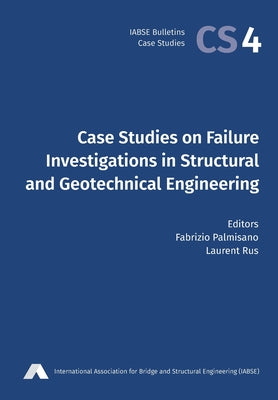
Case Studies on Failure Investigations in Structural and Geotechnical Engineering

by Fabrizio Palmisano

Investigating structural and geotechnical failures

Regular price $64.53 USD
Regular price $107.56 USD Sale price $64.53 USD
Save 40%

Paperback New English

Delivery to your door
In stock·Dispatches in 1–2 business days
Standard shipping* from $4.35
Standard shipping transit* 5–8 business days after dispatch

Faster options are available.

Rates and delivery estimates depend on your destination and item quantity. Estimates are informational only; the final shipping method and rate are selected at checkout.

Secure checkout
American Express Apple Pay DiscoverGoogle Pay Mastercard PayPalVisa
30-day eligible returns Returns & refunds policy

AlbakiReads Editorial

Investigating structural and geotechnical failures

Edited by Fabrizio Palmisano, this bulletin uses emblematic case studies to examine how structural failures arise, how investigators assess their causes and consequences, and what lessons can inform future practice. The subject spans design and construction problems, deterioration and maintenance, misuse, human error, and environmental forces. Alongside technical investigation, the book addresses the professional procedures and legal issues involved in assigning responsibility and resolving claims across different countries. Its emphasis is practical: the cases are presented to illustrate approaches to failure investigations and ways of avoiding recurring pitfalls in engineering work.

Good fit for readers who enjoy

  • Structural engineers at early, mid-career, or experienced levels seeking to understand failure mechanisms.
  • Professionals interested in forensic structural engineering and the procedures involved in investigating failures.
  • Those working in design, inspection, construction, or related project roles.

Themes

Structural and geotechnical failure mechanismsForensic engineering investigationsLegal issues and responsibilityLessons for engineering practice and failure prevention

Based on publisher information and book metadata.

Book overview

Failures of structures occur in all parts of the world as the result of design errors, construction defects, abuse or misuse, ageing and deterioration of the structure, lack of maintenance, as well as environmental effects such as wind, flood, snow, earthquake and, of course, human errors. They can result in catastrophic human costs as well as heavy financial losses to all involved, including local economic growth deceleration, expensive delays and repairs, as well as other repercussions, such as legal actions to responsible parties.

'Welcome' effects of these unfortunate events include a better understanding of the origins and causes of structural failures, their corresponding lessons learnt, and a more effective mitigation of their occurrence through changes in codes, standards, guidelines, and practice.

In several countries the investigation process of the causes of failures, responsibilities, and resolution of the consequent claims have created an active, demanding, and specialised field of professional practice - often referred to as Forensic Structural Engineering - with well-defined technical and legal procedures.

This bulletin is the result of the work lead by the Task Group 5.1 'Forensic Structural Engineering'. It provides understanding of the origins, causes, and consequences of failures, their forensic investigations, and the lessons learnt from them. The aim of the bulletin is not only to describe different examples but, mainly, to use emblematic case studies to show procedures that can be used when dealing with structural failures. In addition to obtaining a deeper insight into the technical causes for structural failure, the reader would be duly informed about the different countries' legal issues related to the investigation process.

The bulletin is aimed at young, mid-career and experienced structural engineers who want to acquire a better understanding of failure mechanisms towards improving their design, inspection, construction, administrative, and other project-related practices to avoid pitfalls that may lead to failures. It also aims at those wanting to acquire a working knowledge of the challenging professional practice of forensic structural engineering.

Shipping & returnsShipping options, delivery timing, and our return policy.

In-stock items normally dispatch within 1–2 business days. The ZIP-code estimator on this page is informational only; the final shipping method, price, and availability are confirmed at checkout for your full order.

For the initial delivery estimate we use these transit windows after dispatch: Standard 5–8 business days, Expedited 2–4 business days, and Priority 1–2 business days. Holiday delays are not included.

Eligible items can be returned within 30 days in accordance with our return policy.

Customer reviews