


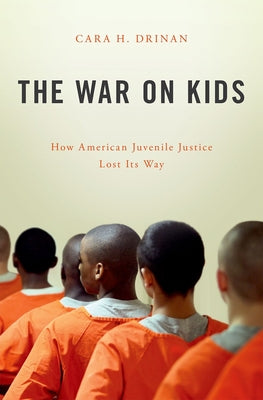
Book overview
In 2003, when Terrence Graham was sixteen, he and three other teens attempted to rob a barbeque restaurant in Jacksonville, Florida. Though they left with no money, and no one was seriously injured, Terrence was sentenced to die in prison for his involvement in that crime.
As shocking as Terrence's sentence sounds, it is merely a symptom of contemporary American juvenile justice practices. In the United States, adolescents are routinely transferred out of juvenile court and into adult criminal court without any judicial oversight. Once in adult court, children can be sentenced without regard for their youth. Juveniles are housed in adult correctional facilities, they may be held in solitary confinement, and they experience the highest rates of sexual and physical assault among inmates. Until 2005, children convicted in America's courts were subject to the death penalty; today, they still may be sentenced to die in prison-no matter what efforts they make to rehabilitate themselves. America has waged a war on kids.
In The War on Kids, Cara Drinan reveals how the United States went from being a pioneer to an international pariah in its juvenile sentencing practices. Academics and journalists have long recognized the failings of juvenile justice practices in this country and have called for change. Despite the uncertain political climate, there is hope that recent Supreme Court decisions may finally make those calls a reality. The War on Kids seizes upon this moment of judicial and political recognition that children are different in the eyes of the law. Drinan chronicles the shortcomings of juvenile justice by drawing upon social science, legal decisions, and first-hand correspondence with Terrence and others like him-individuals whose adolescent errors have cost them their lives. At the same time, The War on Kids maps out concrete steps that states can take to correct the course of American juvenile justice.


