Home › Hardcover Books › The Tort of Discovery Abuse

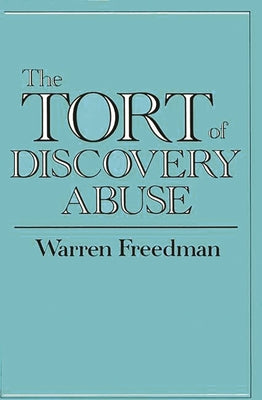
The Tort of Discovery Abuse

by Warren Freedman

Discovery procedures, abuse, and proposed remedies

Regular price $84.36 USD
Regular price $93.74 USD Sale price $84.36 USD
Save 10%

Hardcover New

Delivery to your door
In stock·Dispatches in 1–2 business days
Standard shipping* from $4.35
Standard shipping transit* 5–8 business days after dispatch

Faster options are available.

Rates and delivery estimates depend on your destination and item quantity. Estimates are informational only; the final shipping method and rate are selected at checkout.

Secure checkout
American Express Apple Pay DiscoverGoogle Pay Mastercard PayPalVisa
30-day eligible returns Returns & refunds policy

AlbakiReads Editorial

Discovery procedures, abuse, and proposed remedies

Warren Freedman’s 1989 book first surveys discovery across a range of settings, including federal, state, civil, criminal, arbitration, and international procedures. It then turns to alleged abuses and their effects on litigation, covering topics such as evidence destruction, Freedom of Information Act-related disputes, and insurance. The two-part structure moves from how discovery works to sanctions and remedies, ending with Freedman’s proposal to recognize an intentional tort of discovery abuse. The book frames discovery as a practical legal process with consequences for litigants, including costs and delays, and brings procedural issues together with a specific argument for a new legal remedy.

Good fit for readers who enjoy

  • Corporate attorneys seeking a reference on discovery procedures and alleged abuses
  • Business law instructors or students looking for a supplemental text
  • Readers researching sanctions, remedies, or discovery across different legal settings

Themes

Discovery procedureLitigation costs and delaysAbuse of processSanctions and remediesProposed tort law

Based on publisher information and book metadata.

Book overview

In his latest work, Freedman seeks to establish a contemporary tort of discovery abuse. As he notes at the outset, the discovery process has become a central feature of modern litigation. He deals with the ways in which this interrogatory process can be abused, leading to excessive, costly delays in pretrial hearings and in subsequent litigation, if not settlement of the case. Discovery abuse places onerous demands on litigants who can be forced to produce documentation in such quantities, for example, that the costs involved discourage further litigation. At the outset, Freedman fully examines the nature of the discovery process itself, including international discovery procedures, and then explores abuses of the process and their ramifications for future litigation.

Organized in two main parts, the book begins with an introductory overview of the discovery process in general. Subsequent chapters address issues such as American Bar Association standards for discovery and procedure before the criminal trial; federal, state, and civil discovery procedures; non-party access to discovery materials; discovery in arbitration; and discovery procedures abroad. The second section reveals the nature of the abuses of the discovery process, including the destruction or spoliation of evidence, abuses connected with the Freedom of Information Act, and discovery abuses in the insurance field. The book concludes with chapters devoted to sanctions and remedies for discovery abuse and the Freedman's recommendation for the intentional tort of discovery abuse. Both a practical handbook for corporate attorneys and an ideal supplemental text for courses in business law, this volume offers a clear and comprehensive treatment of a growing problem in litigation proceedings.

Shipping & returnsShipping options, delivery timing, and our return policy.

In-stock items normally dispatch within 1–2 business days. The ZIP-code estimator on this page is informational only; the final shipping method, price, and availability are confirmed at checkout for your full order.

For the initial delivery estimate we use these transit windows after dispatch: Standard 5–8 business days, Expedited 2–4 business days, and Priority 1–2 business days. Holiday delays are not included.

Eligible items can be returned within 30 days in accordance with our return policy.

Customer reviews