Home › African › Slow Poison: IDI Amin, Yoweri Museveni, and the Making of the Ugandan State

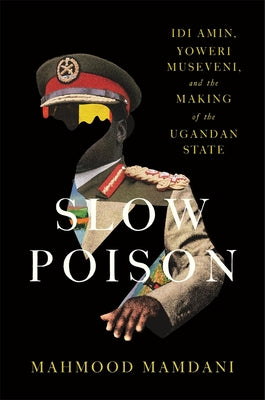
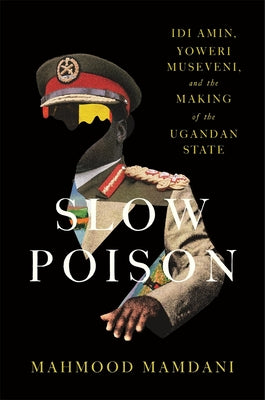
Slow Poison: IDI Amin, Yoweri Museveni, and the Making of the Ugandan State

by Mahmood Mamdani Publisher: BELKNAP PR

Uganda’s postcolonial state in historical perspective

Regular price $26.48 USD
Regular price $44.14 USD Sale price $26.48 USD
Save 40%

Hardcover New English

In stock · Dispatches in 1–2 business days
Delivery to your door
In stock·Dispatches in 1–2 business days
Standard shipping* from $4.35
Standard shipping transit* 5–8 business days after dispatch

Faster options are available.

Rates and delivery estimates depend on your destination and item quantity. Estimates are informational only; the final shipping method and rate are selected at checkout.

Secure checkout
American Express Apple Pay DiscoverGoogle Pay Mastercard PayPalVisa
30-day eligible returns Returns & refunds policy

AlbakiReads Editorial

Uganda’s postcolonial state in historical perspective

Mahmood Mamdani connects the rule of Idi Amin and Yoweri Museveni to Uganda’s longer struggle over decolonization, political power, and national identity. Drawing on his return to his homeland in 1972, he examines how each leader used violence and pursued a different vision of political belonging, while placing their governments in the context of foreign influence and international responses. The account also traces the contrast the author draws between Amin’s expulsion of Uganda’s Indian minority and Museveni’s fragmentation of the majority into ethnic groups. Alongside this political history, Mamdani considers privatization, neoliberal reforms, and the distribution of wealth in Uganda.

Good fit for readers who enjoy

  • Readers interested in Ugandan and East African political history.
  • Readers exploring decolonization, postcolonial governance, and state formation.
  • Readers interested in how international powers and economic policies shape national politics.

Themes

Ugandan political historyDecolonization and state formationEthnicity and national identityForeign influencePrivatization and inequality

Based on publisher information and book metadata.

Book overview

A leading public intellectual gives his authoritative and personal account of the tragic postcolonial fate of Uganda, his homeland.

In 1972, when Mahmood Mamdani came home to Uganda, he found a country transformed by "an orgy of violence." Two years earlier, with support from the colonial powers of Great Britain and Israel, Idi Amin had forcefully cemented his rule. He soon expelled Uganda's Indian minority in hopes of fostering a nation for Black Ugandans. The plan backfired. Amin was followed by Yoweri Museveni, who has now ruled for nearly four decades. Whereas Amin tried to create a Black nation out of the majority, Museveni sought to fragment this majority into multiple ethnic minorities, re-creating a version of colonial indirect rule.

Slow Poison is Mamdani's firsthand report on the tragic unraveling of his country's struggle for decolonialization. A witness to East Africa's endlessly intricate power plays, and one of the most insightful political philosophers of his generation, Mamdani casts a learned and wary eye on Amin, internationally depicted as a buffoon; the radical scholar Museveni; and the global heavyweights that exploited and manipulated Uganda before and after its independence.

Each leader made violence central to his project, but Mamdani sees a signal difference between Amin, who retained popular support to the end, and Museveni, who has not. The Asian expulsion made Amin a monster in the eyes of the West. In contrast, Museveni was hailed as standard bearer of the "war on terror" in Africa and was protected from accountability for far greater crimes. In exchange for adopting the package of neoliberal reforms known as the Washington Consensus, he became Africa's poster child. Amin, who aimed to create a nation of Black millionaires, never became one himself. Meanwhile, Uganda's surrender to privatization has brought Museveni's family immense wealth, even as the country remains one of the world's poorest.

Shipping & returnsShipping options, delivery timing, and our return policy.

In-stock items normally dispatch within 1–2 business days. The ZIP-code estimator on this page is informational only; the final shipping method, price, and availability are confirmed at checkout for your full order.

For the initial delivery estimate we use these transit windows after dispatch: Standard 5–8 business days, Expedited 2–4 business days, and Priority 1–2 business days. Holiday delays are not included.

Eligible items can be returned within 30 days in accordance with our return policy.

Customer reviews

M
AlbakiReads
Malaika Taylor

I highly recommend to for anyone looking for inner clarity

T
AlbakiReads
Thomas DiMassa

Great service and fast service

Great shopping experience! The book arrived quickly, was well packaged, and matched the description perfectly. I would definitely shop with you again

O
AlbakiReads
Olivia

Smooth.