Home › Life Sciences › Silent Earth

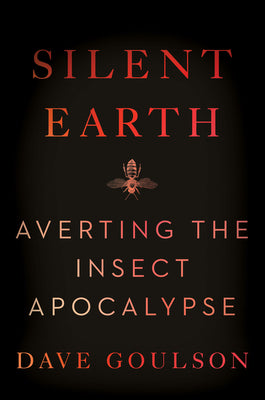
Silent Earth

by Dave Goulson

The ecological importance of insects

Regular price $17.88 USD
Regular price $27.94 USD Sale price $17.88 USD
Save 36%

Paperback New English

Delivery to your door
In stock·Dispatches in 1–2 business days
Standard shipping* from $4.35
Standard shipping transit* 5–8 business days after dispatch

Faster options are available.

Rates and delivery estimates depend on your destination and item quantity. Estimates are informational only; the final shipping method and rate are selected at checkout.

Secure checkout
American Express Apple Pay DiscoverGoogle Pay Mastercard PayPalVisa
30-day eligible returns Returns & refunds policy

Awards & Recognition

  • Critical praise

    Booklist starred review

    Starred review; Booklist calls the book terrific and praises its explanation of the threat posed by declining in...

AlbakiReads Editorial

The ecological importance of insects

Drawing on decades of research, Dave Goulson examines evidence of declining insect populations and the links the book explores between insects, biodiversity, climate change, wildlife and human food supplies. Chemical pesticide use is presented as a major driver of the decline, with the history of DDT providing context for concerns about later pesticides. Examples including honeybee colony collapse and monarch butterfly decline anchor a wider account of what shrinking insect numbers could mean for ecosystems and people. The book also argues that the decline can still be addressed, making conservation a central part of its discussion. Black-and-white illustrations, charts and graphs accompany the text.

Good fit for readers who enjoy

  • Readers interested in entomology and insect conservation
  • Those seeking an accessible account of biodiversity loss and its ecological connections
  • Readers interested in pesticide use and its environmental effects

Themes

Insect declineBiodiversity and ecosystemsPesticidesClimate changeConservation

Based on publisher information and book metadata.

Book overview

"A terrific book...A thoughtful explanation of how the dramatic decline of insect species and numbers poses a dire threat to all life on earth." (Booklist, Starred Review)

In the tradition of Rachel Carson's groundbreaking environmental classic Silent Spring, an award-winning entomologist and conservationist explains the importance of insects to our survival, and offers a clarion call to avoid a looming ecological disaster of our own making.

Drawing on thirty years of research, Goulson has written an accessible, fascinating, and important book that examines the evidence of an alarming drop in insect numbers around the world. "If we lose the insects, then everything is going to collapse," he warned in a recent interview in the New York Times--beginning with humans' food supply. The main cause of this decrease in insect populations is the indiscriminate use of chemical pesticides. Hence, Silent Earth's nod to Rachel Carson's classic Silent Spring which, when published in 1962, led to the global banning of DDT. This was a huge victory for science and ecological health at the time.

Yet before long, new pesticides just as lethal as DDT were introduced, and today, humanity finds itself on the brink of a new crisis. What will happen when the bugs are all gone? Goulson explores the intrinsic connection between climate change, nature, wildlife, and the shrinking biodiversity and analyzes the harmful impact for the earth and its inhabitants.

Meanwhile we have all read stories about hive collapse syndrome affecting honeybee colonies and the tragic decline of monarch butterflies in North America, and more. But it is not too late to arrest this decline, and Silent Earth should be the clarion call. Smart, eye-opening, and essential, Silent Earth is a forceful call to action to save our world, and ultimately, ourselves.

Silent Earth includes approximately 20 black-and-white illustrations and charts and graphs.

Shipping & returnsShipping options, delivery timing, and our return policy.

In-stock items normally dispatch within 1–2 business days. The ZIP-code estimator on this page is informational only; the final shipping method, price, and availability are confirmed at checkout for your full order.

For the initial delivery estimate we use these transit windows after dispatch: Standard 5–8 business days, Expedited 2–4 business days, and Priority 1–2 business days. Holiday delays are not included.

Eligible items can be returned within 30 days in accordance with our return policy.

Customer reviews