Home › Science › Signals from the Subatomic World: How to Build a Proton Precession Magnetometer

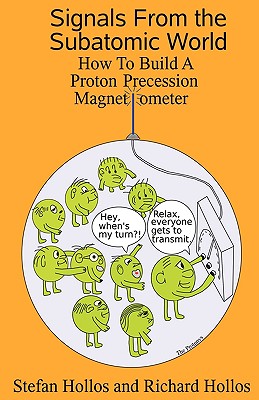
Signals from the Subatomic World: How to Build a Proton Precession Magnetometer

by Stefan Hollos

Building a proton precession magnetometer

Regular price $20.78 USD
Regular price $34.64 USD Sale price $20.78 USD
Save 40%

Paperback New

Delivery to your door
In stock·Dispatches in 1–2 business days
Standard shipping* from $4.35
Standard shipping transit* 5–8 business days after dispatch

Faster options are available.

Rates and delivery estimates depend on your destination and item quantity. Estimates are informational only; the final shipping method and rate are selected at checkout.

Secure checkout
American Express Apple Pay DiscoverGoogle Pay Mastercard PayPalVisa
30-day eligible returns Returns & refunds policy

AlbakiReads Editorial

Building a proton precession magnetometer

Stefan Hollos’s guide connects nuclear magnetic resonance with a practical instrument project: constructing the “Magnum,” a proton precession magnetometer designed for measurements of Earth’s magnetic field. The description places the build in a wider range of uses, including calibrating low-field magnetometers, demonstrating nuclear magnetism and NMR, teaching signal-processing techniques, and measuring magnetic relaxation in liquids. This makes the book both an account of a specific scientific instrument and a resource centered on applying proton behavior to measurement and demonstration.

Good fit for readers who enjoy

  • Readers interested in constructing scientific instruments and measuring Earth’s magnetic field.
  • Students or instructors exploring nuclear magnetism, NMR, or modern signal processing.
  • Those seeking a guide that connects physics concepts with practical measurement applications.

Themes

Proton precession and nuclear magnetic resonanceScientific instrument constructionEarth’s magnetic field measurementSignal processing and educational demonstrations

Based on publisher information and book metadata.

Book overview

The discovery of nuclear magnetic resonance earned Felix Bloch and Ed Purcell the 1952 Nobel Prize in Physics. What their discovery took advantage of, is that protons are the world's smallest magnets. These tiny magnets can also be used to make a magnetometer, of the type described in this book. This book describes how to build a proton precession magnetometer, suitable for measurements of the Earth's magnetic field. This method of measuring magnetic fields offers the theoretically highest possible precision, limited only by the known value of the gyromagnetic ratio of the proton. Uses of the magnetometer include: making precise measurements of the Earth's magnetic field, calibrating low field magnetometers, teaching modern signal processing techniques, demonstrating nuclear magnetism and NMR to students, and measuring nuclear magnetic relaxation in liquids. The Earth's field proton precession magnetometer, called the Magnum, described in this book, was formerly a commercial product, developed and sold by Exstrom Laboratories LLC. It was designed by Stefan Hollos and Richard Hollos.
Shipping & returnsShipping options, delivery timing, and our return policy.

In-stock items normally dispatch within 1–2 business days. The ZIP-code estimator on this page is informational only; the final shipping method, price, and availability are confirmed at checkout for your full order.

For the initial delivery estimate we use these transit windows after dispatch: Standard 5–8 business days, Expedited 2–4 business days, and Priority 1–2 business days. Holiday delays are not included.

Eligible items can be returned within 30 days in accordance with our return policy.

Customer reviews