


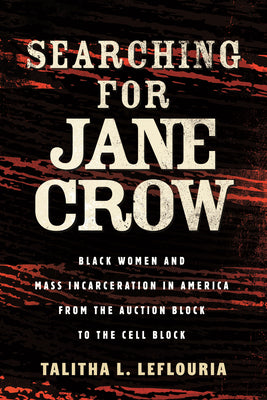
Book overview
A Ms. Magazine "Most Anticipated Feminist Books of 2026" Pick
Gives voice to the Black women whose lives were devastated by the carceral system and sheds powerful light on its slavery-based roots to transform how we think about mass incarceration
Historian Talitha L. LeFlouria centers Black women at the core of a fresh argument: that the system of mass incarceration was established as protection for the institution of slavery and the profits of enslavers and that this legacy continues today.
For centuries, Black women in America have experienced extreme rates of arrest, conviction, and incarceration in the nation's jails and prisons, yet their experiences have often been overlooked in favor of Black men's.
Arguing that the merger between profit and punishment continues to keep Black people bound, LeFlouria traces the connection between enslavement and incarceration, revealing how they have always been intertwined--from the domestic slave trade of 1810-1865, when an estimated one million people were incarcerated in privately owned slave jails, to the post-Civil War era when Black people were enslaved through new systems of state-sponsored mass incarceration, and through to today.
Using archival sources and personal testimonies, LeFlouria tells a new origin story of mass incarceration with the stories of numerous Black women throughout history, including:
- Delia Garlic, who was incarcerated in a slave jail and later sold to a sheriff at the height of the domestic slave trade
- Eliza Purdy, who was jailed and sold to the highest bidder a year after the Civil War ended, and
- Susan Burton, who was commodified and trafficked through a 20th-century cell block, much like an enslaved person on the auction block 200 years prior.
Gives voice to the Black women whose lives were devastated by the carceral system and sheds powerful light on its slavery-based roots to transform how we think about mass incarceration
Historian Talitha L. LeFlouria centers Black women at the core of a fresh argument: that the system of mass incarceration was established as protection for the institution of slavery and the profits of enslavers and that this legacy continues today.
For centuries, Black women in America have experienced extreme rates of arrest, conviction, and incarceration in the nation's jails and prisons, yet their experiences have often been overlooked in favor of Black men's.
Arguing that the merger between profit and punishment continues to keep Black people bound, LeFlouria traces the connection between enslavement and incarceration, revealing how they have always been intertwined--from the domestic slave trade of 1810-1865, when an estimated one million people were incarcerated in privately owned slave jails, to the post-Civil War era when Black people were enslaved through new systems of state-sponsored mass incarceration, and through to today.
Using archival sources and personal testimonies, LeFlouria tells a new origin story of mass incarceration with the stories of numerous Black women throughout history, including:
- Delia Garlic, who was incarcerated in a slave jail and later sold to a sheriff at the height of the domestic slave trade
- Eliza Purdy, who was jailed and sold to the highest bidder a year after the Civil War ended, and
- Susan Burton, who was commodified and trafficked through a 20th-century cell block, much like an enslaved person on the auction block 200 years prior.


