


Book overview
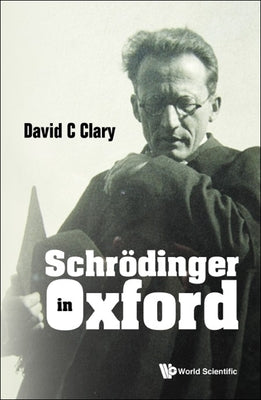
'Clary's account makes for fascinating reading, not least because of its clear style and copious citation of primary sources and original scientific articles. The author provides a compelling narrative of ... Schrödinger's departure in 1933 from a highly eminent position at the University of Berlin to a precarious, untenured position at Magdalen College ... with political and scientific considerations deftly woven together.' [Read Full Review]ScienceErwin Schrödinger was one of the greatest scientists of all time but it is not widely known that he was a Fellow at Magdalen College, Oxford in the 1930s. This book is an authoritative account of Schrödinger's time in Oxford by Sir David Clary, an expert on quantum chemistry and a former President of Magdalen College, who describes Schrödinger's remarkable life and scientific contributions in a language that can be understood by all. Through access to many unpublished manuscripts, the author reveals in unprecedented detail the events leading up to Schrödinger's sudden departure from Berlin in 1933, his arrival in Oxford and award of the Nobel Prize, his dramatic escape from the Nazis in Austria to return to Oxford, and his urgent flight from Belgium to Dublin at the start of the Second World War.The book presents many acute observations from Schrödinger's wife Anny and his daughter Ruth, who was born in Oxford and became an acquaintance of the author in the last years of her life. It also includes a remarkable letter sent to Schrödinger in Oxford from Adolf Hitler, thanking him for his services to the state as a professor in Berlin. Schrödinger's intense interactions with other great scientists who were also refugees during this period, including Albert Einstein and Max Born, are examined in the context of the chaotic political atmosphere of the time. Fascinating anecdotes of how this flamboyant Austrian scientist interacted with the President and Fellows of a highly traditional Oxford College in the 1930s are a novel feature of the book.A gripping and intimate narrative of one of the most colourful scientists in history, Schrödinger in Oxford explains how his revolutionary breakthrough in quantum mechanics has become such a central feature in 21st century science.