Home › Asian › The Rule of Three and the Evolution of Governance

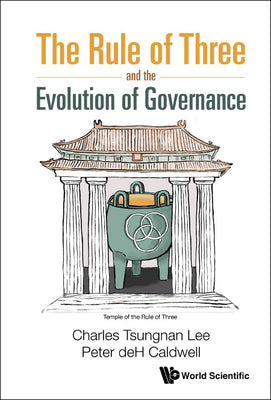
The Rule of Three and the Evolution of Governance

by Lee Charles Tsungnan Publisher: WORLD SCIENTIFIC PUB CO INC

Governance through the lens of three

Regular price $51.10 USD
Regular price $56.78 USD Sale price $51.10 USD
Save 10%

Hardcover New English

In stock · Dispatches in 1–2 business days
Delivery to your door
In stock·Dispatches in 1–2 business days
Standard shipping* from $4.35
Standard shipping transit* 5–8 business days after dispatch

Faster options are available.

Rates and delivery estimates depend on your destination and item quantity. Estimates are informational only; the final shipping method and rate are selected at checkout.

Secure checkout
American Express Apple Pay DiscoverGoogle Pay Mastercard PayPalVisa
30-day eligible returns Returns & refunds policy

AlbakiReads Editorial

Governance through the lens of three

Lee Charles Tsungnan traces changes in human governance from hunter-gatherer societies to the present, linking institutional development to technological change. The book organizes its argument around three factors—boundaries, founding mythology, and what it calls the Rule of Three, the proposed stabilizing role of triadic arrangements compared with dyads. China’s growing global role and relations between China and the United States frame its wider questions about peaceful coexistence among nations. In its forward-looking section, the book proposes an international network connected through trade and cultural exchange, with shunning and shaming offered as responses to harmful conduct between states. These claims are presented as the author’s framework for interpreting governance and its possible future.

Good fit for readers who enjoy

  • Readers interested in political science and the evolution of governance.
  • Readers exploring China–United States relations and international cooperation.
  • Readers interested in historical frameworks linking technology, institutions, and social organization.

Themes

Evolution of governanceTechnology and institutional changeBoundaries and founding mythologyTriadic stabilityInternational trade and cultural exchange

Based on publisher information and book metadata.

Book overview

The changing relationship between East and West, principally between China and America, has brought the whole matter of achieving peaceful and harmonious relations between nations to the fore - particularly with regard to China's recent ascendancy in world affairs. Competition among nations with different forms of governance raises important questions such as: What forms of governance work best to enable people to have harmonious and peaceful life together - both within and amongst nations? What principles can we discover in human history that might point us toward some answers to this fundamental governance question? What might the answers from the past suggest about the future? Where might the future lead?


To find answers to these questions, we set out upon a discovery adventure, going back some 30,000 years in time - to trace the evolutionary progress in human governance from the hunter-gatherer period until today. We also adopted a framework provided by Dr Stephen Pinker's landmark study of the nature of violence over time entitled The Better Angels of Our Nature to provide context and contrast to our own discoveries.


We discovered several basic principles: First, the forms of human governance made an evolutionary progress over the past 30,000 years. Second, the most basic driver for this progress was and still is technological change, which forces complementary changes in governance - or seals institutional failure. Third, we discovered that just three basic factors determined whether a particular form of governance succeeded in flourishing as a tribe, nation, empire or nation-state. Those fundamental factors are: boundaries, founding mythology, and the Rule of Three.


Indeed, our most fundamental finding has been the Rule of Three itself: the principle that says that dyads have inherently unstable natures, whereas triads - like three-legged stools - possess inherent stability. Throughout time, the most successful human arrangements have been those with intricate hierarchies of governance that have the Rule of Three deeply woven into each level.


As for the future, we claim that the best international structure would take the symbolic form of an archipelago of nations interconnected with a system of bridges - where each bridge consists of an intercourse route between two nations, and the nature of the intercourse is largely trade in goods and services followed by cultural exchanges of ideas. A Basic Principle: It is far easier to build bridges between nations than to rebuild nations in some other nation's image. Bad actors amongst nations may then get dealt with as villagers used to deal with nasty neighbors - through shunning and shaming, where shunning means the ceasing of trade intercourse.

Shipping & returnsShipping options, delivery timing, and our return policy.

In-stock items normally dispatch within 1–2 business days. The ZIP-code estimator on this page is informational only; the final shipping method, price, and availability are confirmed at checkout for your full order.

For the initial delivery estimate we use these transit windows after dispatch: Standard 5–8 business days, Expedited 2–4 business days, and Priority 1–2 business days. Holiday delays are not included.

Eligible items can be returned within 30 days in accordance with our return policy.

Customer reviews

M
AlbakiReads
Malaika Taylor

I highly recommend to for anyone looking for inner clarity

T
AlbakiReads
Thomas DiMassa

Great service and fast service

Great shopping experience! The book arrived quickly, was well packaged, and matched the description perfectly. I would definitely shop with you again

O
AlbakiReads
Olivia

Smooth.