


Book overview
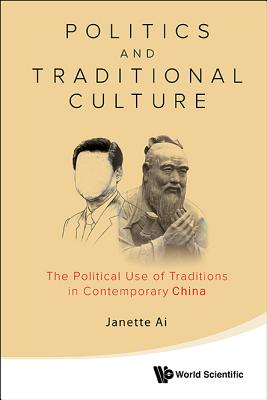
This book examines the political use of China's traditions by the party-state in contemporary China. It argues that the party-state has taken an official Marxist stance in terms of the political use of tradition. Besides looking at the official Marxist stance, this book also looks at critiques of the party-state's use of traditions by the Liberalists and Neo-traditionalists. The underlying political ideologies of these three camps are Marxism, Liberalism and Neo-traditionalism. These three political ideologies have been the most influential in Chinese politics since the Republican Revolution in 1911. The contemporary political use of China's traditions is a competition between Marxism, Liberalism and Neo-traditionalism. This competition is critical to the future of Chinese politics.This book also examines three cases, representing identical ways of the political use of traditions. The three cases are the children's reading-of-the-classics movement, the construction of a Chinese Cultural Symbolic City, the construction and subsequent removal of a statue of Confucius in and from Tiananmen Square, and the revision of the official list of public holidays. The study of the three cases attempts to shed light on the three ways Chinese traditions have been used politically by the party-state. It also attempts to explore the reasons for the party's use of Chinese traditions, the reasons for the party's scepticism with regard to using Chinese traditions, and more importantly, the competition and/or cooperation between Marxists, Liberalists and Neo-traditionalists.