Home › Automation › PLC Controls with Ladder Diagram (LD): IEC 61131-3 and introduction to Ladder programming

PLC Controls with Ladder Diagram (LD): IEC 61131-3 and introduction to Ladder programming

by Tom Mejer Antonsen

A practical introduction to PLC Ladder programming

Regular price $33.88 USD
Regular price $45.18 USD Sale price $33.88 USD
Save 25%

Paperback New

Delivery to your door
In stock·Dispatches in 1–2 business days
Standard shipping* from $4.35
Standard shipping transit* 5–8 business days after dispatch

Faster options are available.

Rates and delivery estimates depend on your destination and item quantity. Estimates are informational only; the final shipping method and rate are selected at checkout.

Secure checkout
American Express Apple Pay DiscoverGoogle Pay Mastercard PayPalVisa
30-day eligible returns Returns & refunds policy

AlbakiReads Editorial

A practical introduction to PLC Ladder programming

Tom Mejer Antonsen’s introduction connects Ladder Diagram fundamentals with the broader work of designing and testing PLC controls. Its coverage moves from hardware, sensors and basic programming to program structure, function blocks, sequencing, simulation and practical automation examples involving a pump station, tank control and conveyor belt. Flowcharts, block diagrams and sequence diagrams are also included as tools for developing and organizing programs. The book presents Ladder programming in relation to IEC 61131-3, while noting that vendors interpret the standard differently and that examples may need adjustment for a particular PLC. Advanced topics such as arrays, loops and PID are outside its beginner scope.

Good fit for readers who enjoy

  • Beginners learning Ladder programming, including those without prior electrical education.
  • Learners seeking practical examples and guidance on structuring, testing and simulating PLC programs.
  • Readers interested in introductory PLC controls applicable across brands, with awareness that vendor implementations differ.

Themes

PLC controls and automationLadder Diagram programmingProgram design and structureTesting and simulation

Based on publisher information and book metadata.

Book overview

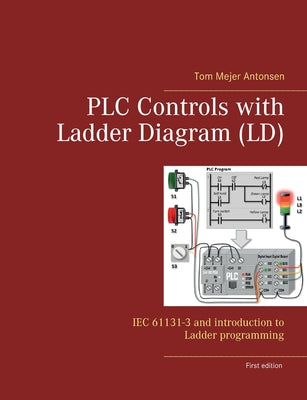
This book is an introduction to the programming language Ladder Diagram (LD) used in Programmable Logic Controllers (PLC). The book provides a general introduction to PLC controls and can be used for any PLC brands. With a focus on enabling readers without an electrical education to learn Ladder programming, the book is suitable for learners without prior knowledge of Ladder. The book contains numerous illustrations and program examples, based on real-world, practical problems in the field of automation. CONTENTS - Background, benefits and challenges of Ladder programming - PLC hardware, sensors, and basic Ladder programming - Practical guides and tips to achieve good program structures - Theory and examples of flowcharts, block diagrams and sequence diagrams - Design guide to develop functions and function blocks - Examples of organizing code in program modules and functions - Sequencing using SELF-HOLD, SET/RESET and MOVE/ COMPARE - Complex code examples for a pump station, tank control and conveyor belt - Design, development, testing and simulation of PLC programs The book describes Ladder programming as described in the standard IEC 61131-3. PLC vendors understand this standard in different ways, and not all vendors follows the standard exactly. This will be clear through material from the vendor. This means that some of the program examples in this book may not work as intended in the PLC type you are using. In addition, there is a difference in how the individual PLC type shows graphic symbols and instructions used in Ladder programming. Note: This is a book for beginners and therefore advanced techniques such as ARRAY, LOOPS, STRUCT, ENUM, STRING, PID and FIFO are not included. The author has published several books and sold more than 15,000 copies.
Shipping & returnsShipping options, delivery timing, and our return policy.

In-stock items normally dispatch within 1–2 business days. The ZIP-code estimator on this page is informational only; the final shipping method, price, and availability are confirmed at checkout for your full order.

For the initial delivery estimate we use these transit windows after dispatch: Standard 5–8 business days, Expedited 2–4 business days, and Priority 1–2 business days. Holiday delays are not included.

Eligible items can be returned within 30 days in accordance with our return policy.

Customer reviews