


Book overview
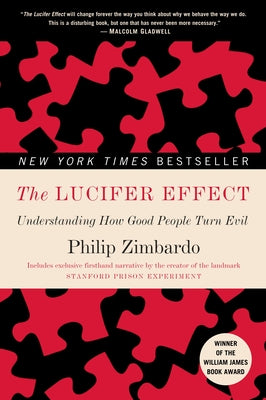
NEW YORK TIMES BESTSELLER - From groundbreaking psychologist Philip Zimbardo comes the definitive firsthand account of the infamous Stanford Prison Experiment that shattered our assumptions about good and evil--the basis for the award-winning film The Stanford Prison Experiment.
"The Lucifer Effect will change forever the way you think about why we behave the way we do. This is a disturbing book, but one that has never been more necessary."--Malcolm Gladwell
"Powerful . . . an extraordinarily valuable addition to the literature of the psychology of violence or 'evil.'"--The American Prospect
What makes good people do bad things? Renowned social psychologist Philip Zimbardo has an answer, and in The Lucifer Effect he explains how--and why--we are all susceptible to the lure of "the dark side." Drawing on examples from history as well as his own trailblazing research, Zimbardo, the creator of the Stanford Prison Experiment, details how situational forces and group dynamics can work in concert to make monsters out of decent men and women. By illuminating the causes behind this disturbing metamorphosis, and by highlighting the ways in which individuals can resist the temptation to give into evil, Zimbardo enables us to better understand a variety of phenomena, from corporate malfeasance to the prisoner abuse and torture in Abu Ghraib to organized genocide.
A shocking, engrossing study that will change the way we view human behavior, The Lucifer Effect forces us to reexamine what we are capable of doing, individually and collectively.
WINNER OF THE WILLIAM JAMES BOOK AWARD


