Home › Architecture › Lost Raleigh: Exploring the Oak City's Architectural History

Lost Raleigh: Exploring the Oak City's Architectural History

by Mary Ruffin Hanbury

Raleigh’s vanished landmarks

Regular price $24.93 USD
Regular price $41.55 USD Sale price $24.93 USD
Save 40%

Paperback New

Delivery to your door
In stock·Dispatches in 1–2 business days
Standard shipping* from $4.35
Standard shipping transit* 5–8 business days after dispatch

Faster options are available.

Rates and delivery estimates depend on your destination and item quantity. Estimates are informational only; the final shipping method and rate are selected at checkout.

Secure checkout
American Express Apple Pay DiscoverGoogle Pay Mastercard PayPalVisa
30-day eligible returns Returns & refunds policy

AlbakiReads Editorial

Raleigh’s vanished landmarks

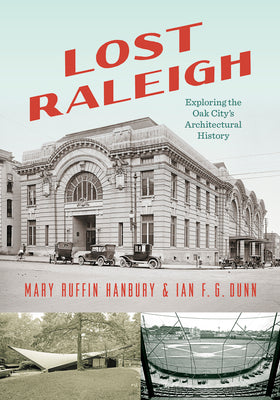
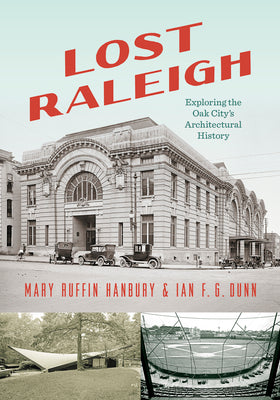
Spanning the late eighteenth through the late twentieth century, *Lost Raleigh* documents buildings and places that have disappeared from the city, using photographs and stories to recover their architectural and cultural histories. Its range includes private homes, public and educational buildings, parks, malls, churches, and businesses, with examples such as Metropolitan Hall and the Eduardo Catalano house. The book also frames preservation as a way to keep local history visible: the lost structures offer clues to how Raleigh looked and what kind of community it once was.

Good fit for readers who enjoy

  • Readers interested in Raleigh’s history and changing urban landscape
  • Those exploring historic preservation and architectural heritage
  • Readers who value photographic records of historic buildings

Themes

Architectural historyHistoric preservationUrban changeLocal and shared history

Based on publisher information and book metadata.

Book overview

Landmarks with great historical, architectural, and cultural value are often demolished in the name of progress, leaving little but memories behind. In the growing city of Raleigh, many important buildings have been razed, but even when no longer present, these landmarks hold histories that can help us understand not only what Raleigh used to look like but what kind of place Raleigh used to be.

Mary Ruffin Hanbury and Ian F. G. Dunn, building on the work of the late Karl Larson, have gathered photographs and stories of Raleigh landmarks from the late eighteenth century to the late twentieth century, including private homes, public and educational buildings, parks, malls, churches, and businesses. Among these noteworthy places are the home of controversial newspaper editor Josephus Daniels; the nineteenth-century municipal building Metropolitan Hall; and the famous Eduardo Catalano house. Full of photos and fascinating stories, Lost Raleigh is a comprehensive look at the city's cultural and architectural past and a plea to protect and preserve the landmarks that make our cities unique, connecting us to our shared history.
Shipping & returnsShipping options, delivery timing, and our return policy.

In-stock items normally dispatch within 1–2 business days. The ZIP-code estimator on this page is informational only; the final shipping method, price, and availability are confirmed at checkout for your full order.

For the initial delivery estimate we use these transit windows after dispatch: Standard 5–8 business days, Expedited 2–4 business days, and Priority 1–2 business days. Holiday delays are not included.

Eligible items can be returned within 30 days in accordance with our return policy.

Customer reviews

M
AlbakiReads
Malaika Taylor

I highly recommend to for anyone looking for inner clarity

T
AlbakiReads
Thomas DiMassa

Great service and fast service

Great shopping experience! The book arrived quickly, was well packaged, and matched the description perfectly. I would definitely shop with you again

O
AlbakiReads
Olivia

Smooth.