Home › Social Science › Intersectionality as Epistemic Resistance: The Critical Theory of Patricia Hill Collins

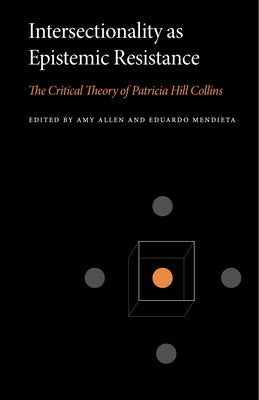
Intersectionality as Epistemic Resistance: The Critical Theory of Patricia Hill Collins

by Amy Allen

Patricia Hill Collins in conversation with critical theory

Regular price $41.62 USD
Regular price $41.62 USD Sale price $41.62 USD

Paperback New

Delivery to your door
Currently unavailable
Secure checkout
American Express Apple Pay DiscoverGoogle Pay Mastercard PayPalVisa
30-day eligible returns Returns & refunds policy

AlbakiReads Editorial

Patricia Hill Collins in conversation with critical theory

This scholarly collection examines how Patricia Hill Collins’s account of intersectionality engages with and reshapes critical social theory. It opens with an introduction placing her work in debates about intersectionality and critical theory, followed by a previously unpublished essay in which Collins reflects on her intellectual and political practice and warns against the co-optation or dilution of intersectionality. The remaining essays connect her work with the Frankfurt School, Indigenous theory, environmental philosophy, and Black politics. A concluding essay gives Collins space to respond to the contributors and consider the practice of critical social theory under pressure. The volume’s structure brings together Collins’s own reflections and scholarly interpretations of her influence.

Good fit for readers who enjoy

  • Students and scholars of critical theory and feminist philosophy
  • Readers studying Black feminism, intersectionality, or Patricia Hill Collins’s work

Themes

IntersectionalityBlack feminist thoughtCritical social theoryPolitical and intellectual practice

Based on publisher information and book metadata.

Book overview

Intersectionality as Epistemic Resistance is the first collection of scholarly essays devoted to the work of Patricia Hill Collins, one of the most influential Black feminist thinkers of her generation. Bringing together philosophers and political theorists, the volume takes stock of Collins's enduring theory of intersectionality and her impact on critical theory.

After an introduction by coeditors Amy Allen and Eduardo Mendieta situating Collins's work within debates about intersectionality and critical theory, the volume opens with a substantial, previously unpublished essay by Collins. In it, she reflects on her intellectual and political praxis amid contemporary political turbulence, emphasizing the need to guard intersectionality against cooptation and dilution. Subsequent chapters explore how her work reshapes core concepts in critical theory, examining its relationship to the Frankfurt School and Indigenous theory as well as its significance for environmental philosophy and Black politics. The book concludes with a new essay in which Collins responds to her interlocutors and reflects on what it means to practice critical social theory at a moment when critical thought itself is under pressure.

An indispensable resource for students and scholars of critical theory, feminist philosophy, Black feminism, and intersectionality, this volume serves as a compelling introduction to Collins's thought and its continuing relevance.

In addition to Collins and the editors, the contributors to this volume include Kanisha D. Bond, William Paris, Mar

Shipping & returnsShipping options, delivery timing, and our return policy.

In-stock items normally dispatch within 1–2 business days. The ZIP-code estimator on this page is informational only; the final shipping method, price, and availability are confirmed at checkout for your full order.

For the initial delivery estimate we use these transit windows after dispatch: Standard 5–8 business days, Expedited 2–4 business days, and Priority 1–2 business days. Holiday delays are not included.

Eligible items can be returned within 30 days in accordance with our return policy.

Customer reviews