Home › Art › German art between the two World Wars

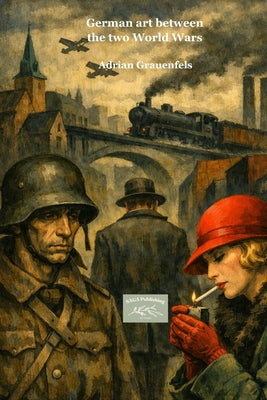
German art between the two World Wars

by Adrian Grauenfels

German art in a period of artistic change

Regular price $24.68 USD
Regular price $32.91 USD Sale price $24.68 USD
Save 25%

Paperback New

Delivery to your door
In stock·Dispatches in 1–2 business days
Standard shipping* from $4.35
Standard shipping transit* 5–8 business days after dispatch

Faster options are available.

Rates and delivery estimates depend on your destination and item quantity. Estimates are informational only; the final shipping method and rate are selected at checkout.

Secure checkout
American Express Apple Pay DiscoverGoogle Pay Mastercard PayPalVisa
30-day eligible returns Returns & refunds policy

AlbakiReads Editorial

German art in a period of artistic change

Adrian Grauenfels places German art’s turn toward experimentation against a longer backdrop of neoclassical dominance and Romantic interest in nature. The account highlights the flourishing of visual art from 1900 to 1933 and the emergence of German Expressionism, which challenged realism and classical conventions through semi-abstraction, angular forms, intense color, and new uses of traditional mediums. It also frames artistic change as part of a broader push across disciplines against established forms and the social order. The description cuts off while introducing the group Die Brücke, so the precise scope of the book’s coverage beyond this overview is not clear.

Good fit for readers who enjoy

  • Readers interested in German art and Expressionism.
  • Readers seeking an overview of artistic shifts from classical traditions to experimental movements.
  • Readers exploring the relationship between art, tradition, and social change.

Themes

German ExpressionismArtistic experimentationTradition and innovationArt and social order

Based on publisher information and book metadata.

Book overview

The arts held a prominent place in the years following the First World War. Until the late 19th century, German art had been dominated by neoclassical forms. The passionate descriptions of nature from Romanticism were also present on the German art scene, yet the direct or composite classical style remained the most widespread form. Music and dance were similarly classical and formal. This began to change at the turn of the century, when German artists began splintering into experimental groups and developed German Expressionism. German art as a whole would never be the same again; artists across every discipline began to push back against the constraints of classical schools and started using their arts to defy tradition and the social order.
Visual art in Germany flourished particularly between 1900 and 1933. German Expressionism emphasized the artists' emotions and rejected realism in favor of semi-abstraction, sharp angles, and intense colors, as well as the use of traditional mediums in novel ways. This shift was inspired by a desire to bridge the past and the present in a new art form. In their manifesto, The Bridge (Die Br
Shipping & returnsShipping options, delivery timing, and our return policy.

In-stock items normally dispatch within 1–2 business days. The ZIP-code estimator on this page is informational only; the final shipping method, price, and availability are confirmed at checkout for your full order.

For the initial delivery estimate we use these transit windows after dispatch: Standard 5–8 business days, Expedited 2–4 business days, and Priority 1–2 business days. Holiday delays are not included.

Eligible items can be returned within 30 days in accordance with our return policy.

Customer reviews