Home › Alternative Family › The Geography of Fredom: A Story of work. Money. Home. And Belonging.

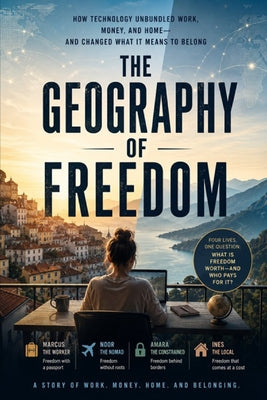
The Geography of Fredom: A Story of work. Money. Home. And Belonging.

by Robert Van Der Veur

Freedom, mobility, and the question of home

Regular price $16.94 USD
Regular price $22.59 USD Sale price $16.94 USD
Save 25%

Paperback New

Delivery to your door
In stock·Dispatches in 1–2 business days
Standard shipping* from $4.35
Standard shipping transit* 5–8 business days after dispatch

Faster options are available.

Rates and delivery estimates depend on your destination and item quantity. Estimates are informational only; the final shipping method and rate are selected at checkout.

Secure checkout
American Express Apple Pay DiscoverGoogle Pay Mastercard PayPalVisa
30-day eligible returns Returns & refunds policy

AlbakiReads Editorial

Freedom, mobility, and the question of home

Remote work and portable income loosen the old ties between a job, a home, and a source of money. Through four people in different circumstances, this narrative nonfiction book examines how unevenly that freedom is distributed: passport access and financial resilience can open possibilities, while legal barriers and neighborhood displacement reveal its costs. The book also lays out a “Freedom Equation” linking income, skills, passport strength, financial resilience, and legal status. Its scope moves from practical questions around remote work, visas, and cost-of-living differences to the personal and community consequences of mobility, including loneliness, unsettled relationships, and pressure on local neighborhoods. The framing question is not simply where someone can go, but where they can belong.

Good fit for readers who enjoy

  • Teens and young adults interested in remote work, digital nomadism, and changing ideas of home.
  • Readers exploring how passports, income, and legal status shape access to geographic mobility.
  • Readers interested in the social effects of remote work and visitor-driven changes to neighborhoods.

Themes

Geographic mobility and belongingRemote work and portable incomeUnequal access to freedomLoneliness and relationships without a fixed homeNeighborhood displacement

Based on publisher information and book metadata.

Book overview

THE GEOGRAPHY OF FREEDOM

For two hundred years, three things were bolted together: where you live, where you work, and where your money comes from. Technology has quietly pried them apart. This book is about what happens next.

Noor Bakker keeps her entire life in two bags and has lived in eleven countries in three years. Her income doesn't care where her body is, her passport opens almost every door on Earth, and by every reasonable measure she is one of the freest people alive. So why, alone on a balcony in Bali, four thousand kilometers from a mother whose hands have started to look like her grandmother's, has she started asking a question her freedom was supposed to make unnecessary: where do I actually belong?

The Geography of Freedom follows four people through the same fracture, and shows how differently it treats each of them. Marcus, a Dutch remote employee, discovers that his passport and portable income make the leap look effortless - until it costs him something he doesn't see coming. Amara, a Nigerian contractor with skills as marketable as anyone's in this book, learns that a weak passport can cancel out even the strongest skill set. And Ines, a Lisbon schoolteacher who never asked to be part of any of this, watches her own neighborhood price her out anyway, one Airbnb at a time.

Built around a simple, unsettling idea - the Freedom Equation, where portable income, portable skills, passport strength, financial resilience, and legal status multiply together, and any single one collapsing toward zero drags the rest down with it - this book moves from the mechanics of remote work and AI-powered leverage, through the tax nomads, visa illusions, and cost-of-living arbitrage that make geographic freedom possible, to the harder, human cost that rarely makes it into the lifestyle-blog version of this story: the loneliness of everywhere, relationships without an address, children without roots, and neighborhoods hollowed out by people who were only ever passing through.

It ends where every reader eventually has to: not with where can I go, which technology and money have made almost trivially easy to answer, but with the older, harder question underneath it - where do I want to belong, and who would I have to leave behind to get there?

Written in the tradition of narrative nonfiction from Jon Krakauer, David Grann, Erik Larson, and Patrick Radden Keefe, The Geography of Freedom turns digital nomadism, remote work, and the future of the office into a single, urgent story about freedom's hidden price - for the people who can afford to buy it, and the people who end up paying for it anyway.

Shipping & returnsShipping options, delivery timing, and our return policy.

In-stock items normally dispatch within 1–2 business days. The ZIP-code estimator on this page is informational only; the final shipping method, price, and availability are confirmed at checkout for your full order.

For the initial delivery estimate we use these transit windows after dispatch: Standard 5–8 business days, Expedited 2–4 business days, and Priority 1–2 business days. Holiday delays are not included.

Eligible items can be returned within 30 days in accordance with our return policy.

Customer reviews