Home › Forensic Medicine › Forensics IV: Guilty Until Proven Innocent

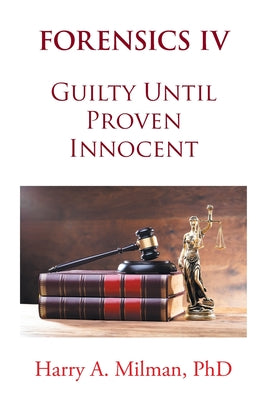
Forensics IV: Guilty Until Proven Innocent

by Harry A. Milman

Forensic evidence and wrongful convictions

Regular price $34.41 USD
Regular price $57.35 USD Sale price $34.41 USD
Save 40%

Hardcover New

Format

Print BookCurrently viewing Hardcover $34.41 USD$57.35 USD
Print BookAvailable Paperback $24.51 USD$40.85 USD
Delivery to your door
In stock·Dispatches in 1–2 business days
Standard shipping* from $4.35
Standard shipping transit* 5–8 business days after dispatch

Faster options are available.

Rates and delivery estimates depend on your destination and item quantity. Estimates are informational only; the final shipping method and rate are selected at checkout.

Secure checkout
American Express Apple Pay DiscoverGoogle Pay Mastercard PayPalVisa
30-day eligible returns Returns & refunds policy

AlbakiReads Editorial

Forensic evidence and wrongful convictions

Harry A. Milman examines how weaknesses in forensic methods and investigative practice can contribute to wrongful convictions. The book discusses fingerprint, firearm, DNA, hair, bite-mark, and bloodstain-pattern analysis, alongside eyewitness identification and testimony that overstates what evidence can establish. It also addresses alleged scientific fraud in forensic laboratories and police and prosecutorial misconduct. Named cases—including Amanda Knox, Ronald Cotton, and Kirk Bloodsworth—show how different kinds of evidence have figured in convictions and later exonerations. The account also considers the lengthy path toward postconviction relief, placing forensic science within a broader examination of criminal justice procedures.

Good fit for readers who enjoy

  • Readers interested in forensic medicine and the limits of forensic evidence.
  • Readers seeking case-based discussion of wrongful convictions and exonerations.
  • Readers interested in the roles of investigators, prosecutors, and forensic experts in criminal cases.

Themes

Forensic evidence and scientific reliabilityWrongful convictions and exonerationEyewitness identificationMisconduct in criminal investigations and proceedingsPostconviction relief

Based on publisher information and book metadata.

Book overview

The American criminal justice system prides itself on convicting only those who have been proven guilty beyond a reasonable doubt, but much of admissible forensic evidence on which juries base their determination of guilt or innocence has not been rigorously tested or peer reviewed. Sometimes, it is contaminated, inaccurate, or unreliable, and occasionally, forensic experts are mistaken in their analysis, exaggerate their conclusions, or provide misleading testimony. In Forensics IV: Guilty Until Proven Innocent, I discuss how flaws in forensic evidence, including fingerprint, firearm, DNA, hair, bite-mark, and bloodstain pattern analyses, as well as limitations in eyewitness identification, overstated conclusions by forensic experts, scientific fraud at the FBI and state forensic crime laboratories, and police and prosecutorial misconduct result in innocent people being found guilty of crimes they did not commit. Once wrongfully incarcerated, it is almost certain the process of postconviction relief toward exoneration will be long and arduous, unlike defendants who are guaranteed a speedy trial. Some of the wrongfully convicted people I reviewed include Amanda Knox, wrongfully incarcerated in Italy for murdering her housemate based on false DNA analysis; Ronald Cotton, misidentified and convicted of rape, only to be exonerated after nearly eleven years and team up with the victim to lecture about faulty eyewitness identification; Brandon Mayfield, an Oregon attorney wrongly accused of being an Islamic terrorist involved in the 2004 train bombing in Madrid, Spain, based on faulty fingerprint identification; Kirk Odom, wrongfully imprisoned for more than twenty-one years as a result of false microscopic hair analysis; Keith Harward, wrongfully convicted of rape and murder based on overstated bite-mark comparison analysis; Julie Rea and David Camm, found guilty of killing her son and his wife and two children, respectively, based on inaccurate bloodstain pattern analysis; Patrick Pursley, wrongfully convicted of murder due to firearm misidentification; Kirk Bloodsworth, the first death row inmate to be exonerated with DNA evidence; and five men wrongfully incarcerated because of false microscopic hair analysis; among others.
Shipping & returnsShipping options, delivery timing, and our return policy.

In-stock items normally dispatch within 1–2 business days. The ZIP-code estimator on this page is informational only; the final shipping method, price, and availability are confirmed at checkout for your full order.

For the initial delivery estimate we use these transit windows after dispatch: Standard 5–8 business days, Expedited 2–4 business days, and Priority 1–2 business days. Holiday delays are not included.

Eligible items can be returned within 30 days in accordance with our return policy.

Customer reviews