Home › Art › Divination Engines: Natural Language Processing, Artificial Intelligence, and the Making of Algorithmic Culture

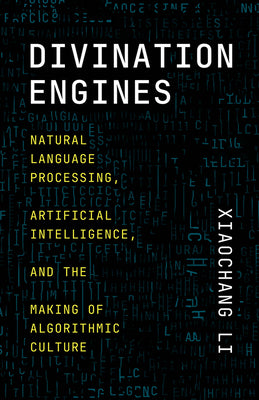
Divination Engines: Natural Language Processing, Artificial Intelligence, and the Making of Algorithmic Culture

by Xiaochang Li

How language became data

Regular price $31.89 USD
Regular price $35.44 USD Sale price $31.89 USD
Save 10%

Hardcover New

Delivery to your door
Currently unavailable
Secure checkout
American Express Apple Pay DiscoverGoogle Pay Mastercard PayPalVisa
30-day eligible returns Returns & refunds policy

AlbakiReads Editorial

How language became data

Xiaochang Li traces the development of natural language processing through the changing ambitions of researchers who sought to make human speech computable. The account connects early speech-recording and analysis devices with work at Bell Labs and IBM, then follows the shift from trying to interpret linguistic meaning toward statistical prediction. That change, the book argues, helped shape tools such as search engines, spam filters, and recommendation systems, while making ever-expanding stores of data central to computation. By linking debates among computer scientists, linguists, and communication engineers to contemporary generative AI, Li frames algorithmic culture as part of a longer history of turning communication into both input and output for machines.

Good fit for readers who enjoy

  • Readers interested in the history of artificial intelligence and natural language processing.
  • Readers exploring how data-driven systems shape the circulation of information.
  • Readers interested in the intersections of technology, language, and communication.

Themes

Natural language processingSpeech recognition and statistical predictionData and algorithmic cultureCommunication and computation

Based on publisher information and book metadata.

Book overview

A revealing and surprising origin story, showing how attempts to render human speech and language computable led from the era of big data to today's AI.

Since the advent of computers, society has fantasized about conversing with machines. In this eye-opening book, technology expert Xiaochang Li shows readers how that dream both fueled the demand for data and set the stage for today's generative AI. With original research and clear explanations, Li elucidates the origins of what's known as natural language processing (NLP) and the heated twentieth-century debates between computer scientists, linguists, and communication engineers that shaped today's technology. Starting with early devices that recorded, analyzed, and attempted to interpret human speech, she demonstrates how computer speech recognition, particularly efforts led by Bell Labs and IBM, advanced technology by deemphasizing linguistic meaning in favor of statistical prediction. In other words, researchers gradually abandoned systems that sought to understand human language, opting instead for work-arounds that simply predicted patterns in speech and text data. That solution became incredibly and surprisingly adaptable. As Li reveals, transforming linguistic questions into engineering ones ushered in the routine operation of search engines, spam filters, and the varied content sorting and recommendation mechanisms that regulate the access, circulation, and legitimacy of information across every platform. But this has all come at the cost of forever requiring copious and ever-growing amounts of new data.

At its core, Divination Engines illuminates how the artifacts of human communication--speech, text, and images--have become both the fodder for and products of computers. This connection between communication and computation, Li shows, has given rise to data-driven analytics, machine learning, and today's algorithmic culture.

Shipping & returnsShipping options, delivery timing, and our return policy.

In-stock items normally dispatch within 1–2 business days. The ZIP-code estimator on this page is informational only; the final shipping method, price, and availability are confirmed at checkout for your full order.

For the initial delivery estimate we use these transit windows after dispatch: Standard 5–8 business days, Expedited 2–4 business days, and Priority 1–2 business days. Holiday delays are not included.

Eligible items can be returned within 30 days in accordance with our return policy.

Customer reviews

M
AlbakiReads
Malaika Taylor

I highly recommend to for anyone looking for inner clarity

T
AlbakiReads
Thomas DiMassa

Great service and fast service

Great shopping experience! The book arrived quickly, was well packaged, and matched the description perfectly. I would definitely shop with you again

O
AlbakiReads
Olivia

Smooth.