Home › Hardcover Books › Developmental Epilepsy: From Clinical Medicine to Neurobiological Mechanisms

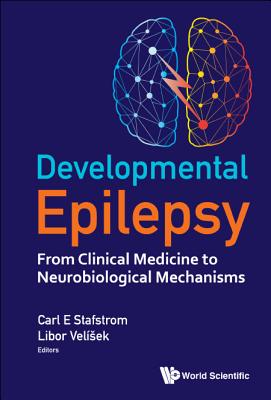
Developmental Epilepsy: From Clinical Medicine to Neurobiological Mechanisms

by Carl E. Stafstrom Publisher: WORLD SCIENTIFIC PUB CO INC

Critically Recognized

Connecting developmental epilepsy research across clinic and laboratory

Regular price $175.80 USD
Regular price $195.34 USD Sale price $175.80 USD
Save 10%

Hardcover New English

In stock · Dispatches in 1–2 business days
Delivery to your door
In stock·Dispatches in 1–2 business days
Standard shipping* from $4.35
Standard shipping transit* 5–8 business days after dispatch

Faster options are available.

Rates and delivery estimates depend on your destination and item quantity. Estimates are informational only; the final shipping method and rate are selected at checkout.

Secure checkout
American Express Apple Pay DiscoverGoogle Pay Mastercard PayPalVisa
30-day eligible returns Returns & refunds policy

Awards & Recognition

  • Critical praise

    Praised in Journal of Paediatric Epilepsy

    A favorable review describes the book as a compact, accessible reference that bridges basic science and clinical...

AlbakiReads Editorial

Connecting developmental epilepsy research across clinic and laboratory

Edited by Carl E. Stafstrom, this chapter collection places clinical questions about childhood epilepsy alongside research into how seizures arise in the developing brain. An opening discussion of brain development sets up later topics, including cognitive impairment, febrile seizures, inflammation, brain malformations, genetics, hormones, and early-life stress. The book also examines the mTOR pathway and discusses potential treatment approaches for specific syndromes. Its organizing concern is the connection between problems encountered in clinical care and mechanisms investigated through basic and translational research—not a single explanation for every developmental epilepsy.

Good fit for readers who enjoy

  • Clinicians interested in the research context of developmental epilepsy
  • Neuroscience researchers studying seizures in the developing brain
  • Readers seeking a cross-disciplinary collection on childhood epilepsy syndromes

Themes

Developmental epilepsyBrain development and seizuresClinical and translational researchCognitive impairmentBiological mechanisms and treatment approaches

Based on publisher information and book metadata.

Book overview

This is a collection of chapters from renowned authors focused on the contemporary issues in developmental epilepsy, from both clinical and basic science perspectives. Developmental epilepsy (or epilepsy syndromes), while receiving much more attention than 20 years ago, is still not well understood. This lag in research is reflected in the challenges of treating developmental epilepsy. The book discusses these challenges in the clinic and brings them back to the laboratory bench (and in some cases back to the bedside). This book fills a gap in the literature on developing epilepsy by bridging current clinical knowledge with basic and translational research in the developing brain relevant for developmental epilepsy.

The book is introduced by a chapter on brain development to provide a background for understanding when and how seizures and epilepsy can emerge. Recent clinical research indicates strong relationship between childhood epilepsy and developmental cognitive impairment. This connection can be studied in experimental animals and can uncover developmental mechanisms common to both conditions. Targeting those mechanisms might reveal disease-modifying treatments. Febrile seizures are very common in the pediatric population and their impact on further epilepsy development is explored. The link between immunity, inflammation and epileptogenesis in the developing brain is explored. Many developmental epilepsies arise from brain malformations or neuronal migration deficits; some juvenile epilepsies have a clear genetic basis while the etiology of others is less certain. Recently, the involvement of the mTOR pathway in certain childhood epilepsy syndromes was recognized, prompting the repurposing of drugs used in cancer treatment for therapy of these specific epilepsy syndromes. Steroid hormones have significant hormonal effects on neurotransmitter receptors and function, and therefore have an impact on childhood epilepsy; sex steroids may have long term organizational effects on brain structure and epilepsy development. Stress, even early in development, may affect the developing brain and lead to behavioral changes as well as increased susceptibility to seizures.

Shipping & returnsShipping options, delivery timing, and our return policy.

In-stock items normally dispatch within 1–2 business days. The ZIP-code estimator on this page is informational only; the final shipping method, price, and availability are confirmed at checkout for your full order.

For the initial delivery estimate we use these transit windows after dispatch: Standard 5–8 business days, Expedited 2–4 business days, and Priority 1–2 business days. Holiday delays are not included.

Eligible items can be returned within 30 days in accordance with our return policy.

Customer reviews

M
AlbakiReads
Malaika Taylor

I highly recommend to for anyone looking for inner clarity

T
AlbakiReads
Thomas DiMassa

Great service and fast service

Great shopping experience! The book arrived quickly, was well packaged, and matched the description perfectly. I would definitely shop with you again

O
AlbakiReads
Olivia

Smooth.