Home › Human Geography › The Day the World Stops Shopping: How Ending Consumerism Saves the Environment and Ourselves

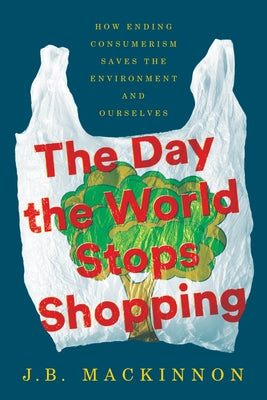
The Day the World Stops Shopping: How Ending Consumerism Saves the Environment and Ourselves

by J. B. MacKinnon

Rethinking consumption and its costs

Regular price $17.71 USD
Regular price $29.52 USD Sale price $17.71 USD
Save 40%

Paperback New

Delivery to your door
In stock·Dispatches in 1–2 business days
Standard shipping* from $4.35
Standard shipping transit* 5–8 business days after dispatch

Faster options are available.

Rates and delivery estimates depend on your destination and item quantity. Estimates are informational only; the final shipping method and rate are selected at checkout.

Secure checkout
American Express Apple Pay DiscoverGoogle Pay Mastercard PayPalVisa
30-day eligible returns Returns & refunds policy

AlbakiReads Editorial

Rethinking consumption and its costs

J. B. MacKinnon examines the tension between economies that depend on continued spending and environmental limits on consumption. The inquiry ranges from big-box stores in the United States to hunter-gatherer cultures in Namibia and communities in Ecuador, then takes on an unexpected real-world dimension when the coronavirus pandemic brings shopping to a halt. Drawing on experts in climate change and economics, the book considers how consuming less might affect the environment, society, and everyday life, including people’s relationships with possessions and the natural world. Its central question is practical as well as systemic: whether consumption can fall to sustainable levels without economic collapse.

Good fit for readers who enjoy

  • Readers interested in the environmental and economic dimensions of consumerism.
  • Readers curious about how reduced consumption could affect communities and daily life.
  • Readers seeking reporting that connects global examples with the pandemic-era interruption of shopping.

Themes

Consumerism and economic dependenceConsumption and environmental limitsCommunity and everyday lifeRelationships with possessions and nature

Based on publisher information and book metadata.

Book overview

Consuming less is our best strategy for saving the planet--but can we do it? In this thoughtful and surprisingly optimistic book, journalist J. B. MacKinnon investigates how we may achieve a world without shopping.

We can't stop shopping. And yet we must. This is the consumer dilemma.

The economy says we must always consume more: even the slightest drop in spending leads to widespread unemployment, bankruptcy, and home foreclosure.

The planet says we consume too much: in America, we burn the earth's resources at a rate five times faster than it can regenerate. And despite efforts to "green" our consumption--by recycling, increasing energy efficiency, or using solar power--we have yet to see a decline in global carbon emissions.

Addressing this paradox head-on, acclaimed journalist J. B. MacKinnon asks, What would really happen if we simply stopped shopping? Is there a way to reduce our consumption to earth-saving levels without triggering economic collapse? At first this question took him around the world, seeking answers from America's big-box stores to the hunter-gatherer cultures of Namibia to communities in Ecuador that consume at an exactly sustainable rate. Then the thought experiment came shockingly true: the coronavirus brought shopping to a halt, and MacKinnon's ideas were tested in real time.

Drawing from experts in fields ranging from climate change to economics, MacKinnon investigates how living with less would change our planet, our society, and ourselves. Along the way, he reveals just how much we stand to gain: An investment in our physical and emotional wellness. The pleasure of caring for our possessions. Closer relationships with our natural world and one another. Imaginative and inspiring, The Day the World Stops Shopping will embolden you to envision another way.

Shipping & returnsShipping options, delivery timing, and our return policy.

In-stock items normally dispatch within 1–2 business days. The ZIP-code estimator on this page is informational only; the final shipping method, price, and availability are confirmed at checkout for your full order.

For the initial delivery estimate we use these transit windows after dispatch: Standard 5–8 business days, Expedited 2–4 business days, and Priority 1–2 business days. Holiday delays are not included.

Eligible items can be returned within 30 days in accordance with our return policy.

Customer reviews