


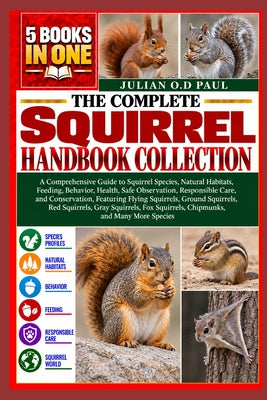
Book overview
Discover the remarkable world of squirrels with a practical and engaging resource created for wildlife enthusiasts, nature lovers, students, educators, photographers, backyard observers, conservation-minded readers, and anyone interested in understanding these energetic and adaptable mammals.
Squirrels are found across an impressive variety of environments, from forests and woodlands to grasslands, mountains, parks, gardens, and urban neighborhoods. Although they are familiar animals in many parts of the world, their behavior, communication, feeding strategies, nesting habits, seasonal activities, and ecological importance are far more complex than casual observation might suggest.
This comprehensive 5-books-in-1 collection brings together essential information about squirrel species, natural habitats, feeding ecology, behavior, life cycles, health awareness, safe observation, human-wildlife interactions, responsible care considerations, and conservation. Clear explanations make the material accessible to beginners while providing useful detail for readers who want to deepen their knowledge of squirrel biology and natural history.
Explore Flying Squirrels, Ground Squirrels, Red Squirrels, Gray Squirrels, Fox Squirrels, Chipmunks, and many other fascinating members of the squirrel family. Readers will discover how species differ in appearance, geographical distribution, preferred habitat, daily activity, food choices, nesting behavior, movement, communication, and survival strategies.
Learn how tree squirrels navigate complex woodland environments, how ground-dwelling species use underground burrow systems, and how flying squirrels use specialized membranes to glide between elevated surfaces. These different lifestyles demonstrate the remarkable adaptations that have allowed members of the squirrel family to occupy diverse ecological niches.
Feeding and foraging receive detailed attention, including natural food selection, seasonal availability, caching behavior, seed and nut consumption, plant materials, fungi, and other foods used by different species. Readers can develop a better understanding of how squirrels locate, store, recover, and compete for food throughout changing seasons.
DISCLAIMER
This book is intended for general educational and informational purposes only. It does not provide veterinary, medical, wildlife-rehabilitation, legal, conservation, or professional animal-care advice. Wildlife regulations vary considerably by country, state, province, territory, and local jurisdiction. Capturing, possessing, transporting, rehabilitating, breeding, relocating, or releasing wild squirrels may require authorization or may be prohibited. Readers are responsible for checking and complying with applicable laws and regulations.
Wild squirrels should not be handled unnecessarily. An injured, sick, trapped, orphaned, or apparently abandoned squirrel should be approached cautiously, and advice should be obtained from an authorized wildlife rehabilitator, veterinarian, animal-control service, or appropriate wildlife authority when assistance is needed. Young squirrels found alone are not automatically orphaned, and unnecessary removal from the wild may interfere with normal parental care.


