Home › Americas (North Central South West Indies) › Coffee Nation: How One Commodity Transformed the Early United States

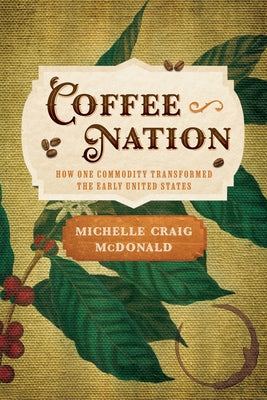
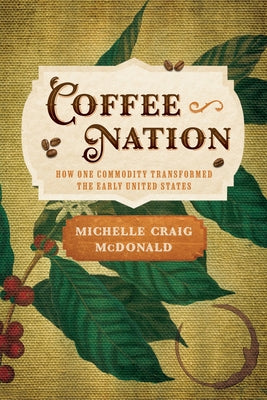
Coffee Nation: How One Commodity Transformed the Early United States

by Michelle Craig McDonald

Coffee, commerce, and the early United States

Regular price $45.81 USD
Regular price $53.90 USD Sale price $45.81 USD
Save 15%

Hardcover New

Delivery to your door
In stock·Dispatches in 1–2 business days
Standard shipping* from $4.35
Standard shipping transit* 5–8 business days after dispatch

Faster options are available.

Rates and delivery estimates depend on your destination and item quantity. Estimates are informational only; the final shipping method and rate are selected at checkout.

Secure checkout
American Express Apple Pay DiscoverGoogle Pay Mastercard PayPalVisa
30-day eligible returns Returns & refunds policy

AlbakiReads Editorial

Coffee, commerce, and the early United States

Michelle Craig McDonald traces coffee through the networks that connected plantation labor in the Caribbean and South America with merchants, shops, homes, and export businesses in North America. Drawing on archival, quantitative, and material evidence, the book links an everyday drink to the growth of Atlantic trade and the expansion of U.S. commerce from the colonial era into the nineteenth century. Its central historical tension is between coffee’s success as an American staple and the nation’s dependence on overseas production and trade. The account also places enslaved laborers, farmers, merchants, retailers, consumers, and advertisers within the commodity’s history, while questioning how coffee’s commercial importance fits familiar narratives of independence.

Good fit for readers who enjoy

  • Readers interested in the economic and social history of the early United States.
  • Those studying Atlantic trade, commodity histories, or coffee’s global circulation.
  • Readers interested in the connections among slavery, commerce, and everyday consumption.

Themes

Coffee and Atlantic tradeSlavery and commodity productionU.S. commerce and national autonomyConsumption and advertising

Based on publisher information and book metadata.

Book overview

A fascinating look at how coffee tied the economic future of the early United States to the wider Atlantic world

Coffee is among the most common goods traded and consumed worldwide, and so omnipresent its popularity is often taken for granted. But even everyday habits have a history. When and why coffee become part of North American daily life is at the center of Coffee Nation. Using a wide range of archival, quantitative, and material evidence, Michelle Craig McDonald follows coffee from the slavery-based plantations of the Caribbean and South America, through the balance sheets of Atlantic world merchants, into the coffeehouses, stores, and homes of colonial North Americans, and ultimately to the growing import/export businesses of the early nineteenth-century United States that rebranded this exotic good as an American staple. The result is a sweeping history that explores how coffee shaped the lives of enslaved laborers and farmers, merchants and retailers, consumers and advertisers.

Coffee Nation also challenges traditional interpretations of the American Revolution, as coffee's spectacular profitability in US markets and popularity on the new nation's tables by the mid-nineteenth century was the antithesis of independence. From its beginnings as a colonial commodity in the early eighteenth century, coffee's popularity soared to become a leading global economy by the 1830s. The United States dominated this growth, by importing ever-increasing amounts of the commodity for drinkers at home and developing a lucrative re-export trade to buyers overseas. But while income generated from coffee sales made up an expanding portion of US trade revenue, the market always depended on reliable access to a commodity that the nation could not grow for itself. By any measure, the coffee industry was a financial success story, but one that runs counter to the dominant narrative of national autonomy. Distribution, not production, lay at the heart of North America's coffee business, and its profitability and expansion relied on securing and maintaining ties first with the Caribbean and then Latin America.

Shipping & returnsShipping options, delivery timing, and our return policy.

In-stock items normally dispatch within 1–2 business days. The ZIP-code estimator on this page is informational only; the final shipping method, price, and availability are confirmed at checkout for your full order.

For the initial delivery estimate we use these transit windows after dispatch: Standard 5–8 business days, Expedited 2–4 business days, and Priority 1–2 business days. Holiday delays are not included.

Eligible items can be returned within 30 days in accordance with our return policy.

Customer reviews

M
AlbakiReads
Malaika Taylor

I highly recommend to for anyone looking for inner clarity

T
AlbakiReads
Thomas DiMassa

Great service and fast service

Great shopping experience! The book arrived quickly, was well packaged, and matched the description perfectly. I would definitely shop with you again

O
AlbakiReads
Olivia

Smooth.