Home › Biography & Autobiography › We Called It a War: Lessons Learned from the Fight to End Poverty

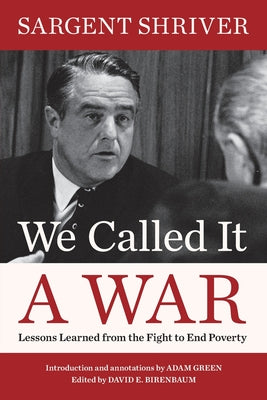
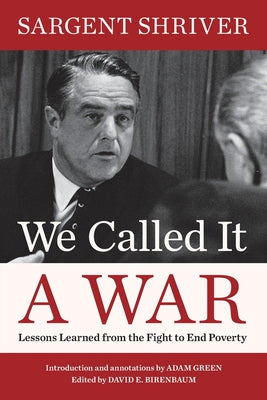
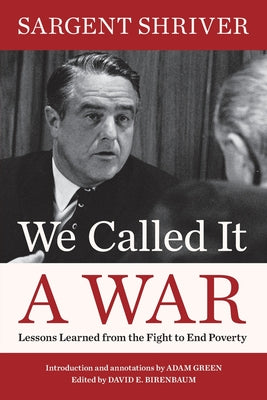
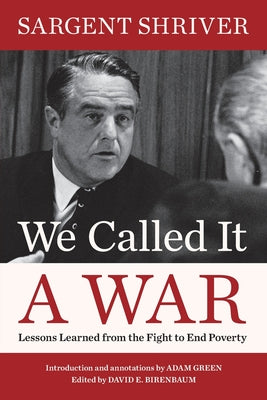
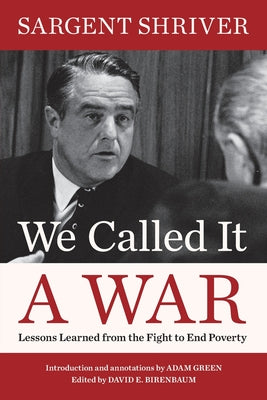
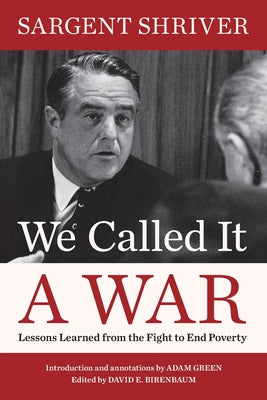
We Called It a War: Lessons Learned from the Fight to End Poverty

by Sargent Shriver

Inside the War on Poverty

Regular price $22.03 USD
Regular price $36.72 USD Sale price $22.03 USD
Save 40%

Paperback New

Delivery to your door
In stock·Dispatches in 1–2 business days
Standard shipping* from $4.35
Standard shipping transit* 5–8 business days after dispatch

Faster options are available.

Rates and delivery estimates depend on your destination and item quantity. Estimates are informational only; the final shipping method and rate are selected at checkout.

Secure checkout
American Express Apple Pay DiscoverGoogle Pay Mastercard PayPalVisa
30-day eligible returns Returns & refunds policy

AlbakiReads Editorial

Inside the War on Poverty

Sargent Shriver’s memoir looks back on leading the War on Poverty from 1964 to 1968, tracing how a presidential pledge became a network of social programs. Its account connects policy-making in Washington—drafting legislation, navigating Congress and establishing the Office of Economic Opportunity—with the community-based work of initiatives including Head Start, Job Corps and VISTA. Shriver also reflects on collaboration, public administration and the practical challenges of putting broad social aims into operation. The book’s historical perspective is paired with an argument, drawn from his experience, for applying collaborative, community-centered approaches to poverty in America today.

Good fit for readers who enjoy

  • Readers interested in Sargent Shriver and the history of U.S. anti-poverty policy
  • Readers studying social programs, public administration or community-based initiatives
  • Readers seeking a first-hand political memoir focused on social justice and poverty

Themes

The War on PovertySocial policy and public administrationCommunity-based actionEqual opportunity and social justice

Based on publisher information and book metadata.

Book overview

We Called It a War: Lessons Learned from the Fight to End Poverty is a first-hand account of Sargent Shriver's leadership of the War on Poverty, which he undertook under President Lyndon Johnson between 1964 and 1968. The memoir offers a rare inside view of how programs like Head Start, Community Action, Volunteers in Service to America (VISTA, now AmeriCorps VISTA), Job Corps, Legal Services, Neighborhood Health Centers, Foster Grandparents, Upward Bound, and Work-Study were conceived and implemented-and how Shriver's collaborative, community-based approach can be applied to tackling poverty in America today. The book gives the reader intimate insights into the opportunities and challenges of translating President Johnson's audacious pledge to end poverty into a working set of social programs that continue to uplift and empower communities across the United States today.


In leading the anti-poverty effort, Shriver was tasked with drafting the requisite legislation, ushering it through a skeptical Congress, creating the Office of Economic Opportunity (OEO), and recruiting the talented anti-poverty warriors who would take the OEO from concept to implementation.


Shriver's words reveal a public administrator skilled at creating major social policy; a global citizen driven by his spiritual faith and commitment to social justice; a principled pragmatist who successfully executed grand ideas; a social entrepreneur whose skeptical approach to bureaucracy enabled him to liberate the creative energies of the diverse individuals who collaborated with him; and a politician who earned the trust and respect of his adversaries.


Shriver's words remind us that to achieve equal opportunity and justice for all, we must again create an environment that nurtures bold ideas and empowers decisive, community-based action.

Shipping & returnsShipping options, delivery timing, and our return policy.

In-stock items normally dispatch within 1–2 business days. The ZIP-code estimator on this page is informational only; the final shipping method, price, and availability are confirmed at checkout for your full order.

For the initial delivery estimate we use these transit windows after dispatch: Standard 5–8 business days, Expedited 2–4 business days, and Priority 1–2 business days. Holiday delays are not included.

Eligible items can be returned within 30 days in accordance with our return policy.

Customer reviews