


Book overview
If you drive into any American city with the car stereo blasting, you'll undoubtedly find radio stations representing R&B/hip-hop, country, Top 40, adult contemporary, rock, and Latin, each playing hit after hit within that musical format. American music has created an array of rival mainstreams, complete with charts in multiple categories. Love it or hate it, the world that radio made has steered popular music and provided the soundtrack of American life for more than half a century.
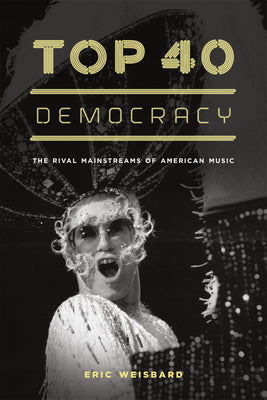
In Top 40 Democracy, Eric Weisbard studies the evolution of this multicentered pop landscape, along the way telling the stories of the Isley Brothers, Dolly Parton, A&M Records, and Elton John, among others. He sheds new light on the upheavals in the music industry over the past fifteen years and their implications for the audiences the industry has shaped. Weisbard focuses in particular on formats-constructed mainstreams designed to appeal to distinct populations-showing how taste became intertwined with class, race, gender, and region. While many historians and music critics have criticized the segmentation of pop radio, Weisbard finds that the creation of multiple formats allowed different subgroups to attain a kind of separate majority status-for example, even in its most mainstream form, the R&B of the Isley Brothers helped to create a sphere where black identity was nourished. Music formats became the one reliable place where different groups of Americans could listen to modern life unfold from their distinct perspectives. The centers of pop, it turns out, were as complicated, diverse, and surprising as the cultural margins. Weisbard's stimulating book is a tour de force, shaking up our ideas about the mainstream music industry in order to tease out the cultural importance of all performers and songs.
In Top 40 Democracy, Eric Weisbard studies the evolution of this multicentered pop landscape, along the way telling the stories of the Isley Brothers, Dolly Parton, A&M Records, and Elton John, among others. He sheds new light on the upheavals in the music industry over the past fifteen years and their implications for the audiences the industry has shaped. Weisbard focuses in particular on formats-constructed mainstreams designed to appeal to distinct populations-showing how taste became intertwined with class, race, gender, and region. While many historians and music critics have criticized the segmentation of pop radio, Weisbard finds that the creation of multiple formats allowed different subgroups to attain a kind of separate majority status-for example, even in its most mainstream form, the R&B of the Isley Brothers helped to create a sphere where black identity was nourished. Music formats became the one reliable place where different groups of Americans could listen to modern life unfold from their distinct perspectives. The centers of pop, it turns out, were as complicated, diverse, and surprising as the cultural margins. Weisbard's stimulating book is a tour de force, shaking up our ideas about the mainstream music industry in order to tease out the cultural importance of all performers and songs.


