Home › Children's Books/Ages 9-12 › There Was Once a Slave: The Heroic Story of Frederick Douglass

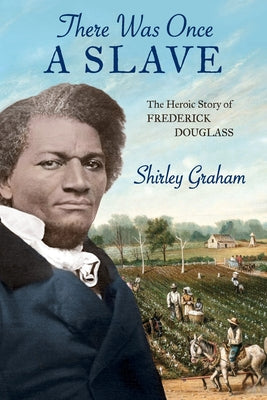
There Was Once a Slave: The Heroic Story of Frederick Douglass

by Shirley Graham

Frederick Douglass’s life, from enslavement to public leadership

Regular price $17.70 USD
Regular price $22.13 USD Sale price $17.70 USD
Save 20%

Paperback New

Delivery to your door
In stock·Dispatches in 1–2 business days
Standard shipping* from $4.35
Standard shipping transit* 5–8 business days after dispatch

Faster options are available.

Rates and delivery estimates depend on your destination and item quantity. Estimates are informational only; the final shipping method and rate are selected at checkout.

Secure checkout
American Express Apple Pay DiscoverGoogle Pay Mastercard PayPalVisa
30-day eligible returns Returns & refunds policy

AlbakiReads Editorial

Frederick Douglass’s life, from enslavement to public leadership

Originally published in the Messner Biographies series, this account follows Frederick Douglass from his early life under slavery through his determination to learn to read, his escape from Maryland, and his emergence as a leading abolitionist. It places his public work alongside figures including William Lloyd Garrison, John Brown, and Abraham Lincoln, while covering the founding of The North Star, his lectures in the United States and England, and later roles in Washington and Haiti. A new foreword by Amber O’Neal Johnston accompanies Shirley Graham’s biography, which also draws on Graham’s family connection to places Douglass visited.

Good fit for readers who enjoy

  • Ages 9–12 exploring biographies of social activists
  • Young readers studying slavery, abolition, and the Civil War era
  • Readers interested in Frederick Douglass’s public life and advocacy

Themes

Enslavement and freedomLiteracy and self-educationAbolitionismCivic leadershipAfrican American history

Based on publisher information and book metadata.

Book overview

With a new foreword by Amber O'Neal Johnston, author and established authority on infusing diverse voices in traditional curricula.

This is the story of one of the noblest men in American history-a man who escaped from slavery to become one of the great leaders of his century-a friend to Lincoln and other great statesmen of his generation.

Thirty years before the Civil War Frederick Douglass was a slave-his lot, hard labor in the cotton fields, frequent lashings, a starvation diet, and prayers before breakfast.

How Douglass learned to read and taught his fellow slaves; how he planned and finally accomplished his escaped from Maryland to New York and thence to New Bedford is a thrilling and emotional tale. But the story of his long public career, the work he did, the causes he espoused, the friends he made and the positions of trust and honor he filled is one of almost superhuman accomplishment.

Shortly after he and his young wife, Anna, arrived in New Bedford, Douglass became an active participant in the abolitionist movement. It was at this time he met and became the friend of William Lloyd Garrison. Later he was to found the famous abolitionist newspaper, The North Star, and to lecture in both America and England, supporting every progressive cause of his day.

John Brown hid in the attic of the Douglass home after the Kansas massacre and it was there that he planned the Virginia campaign which ended in the debacle of Harpers Ferry, his death, and in Douglass' flight to England, with the Governor of Virginia threatening to send a warship after him.

Frederick Douglass returned to America in time to help elect Abraham Lincoln and through half a dozen administrations he remained an influence in Washington, holding positions of honor that culminated in his appointment as Minister to Haiti.

Shirley Graham brought to her research and study a youthful admiration for Douglass. When she was a child, her father used to tell her stories of how Douglass visited the old Wayne County farmhouse where Miss Graham was born. The farmhouse had been purchased by her great-great-grandfather long before the Civil War after he had been freed from slavery, and it subsequently became a station in the underground railway. Frederick Douglass had been a frequent visitor during her father's childhood.

Originally published as one of the Messner Biographies series.

Shipping & returnsShipping options, delivery timing, and our return policy.

In-stock items normally dispatch within 1–2 business days. The ZIP-code estimator on this page is informational only; the final shipping method, price, and availability are confirmed at checkout for your full order.

For the initial delivery estimate we use these transit windows after dispatch: Standard 5–8 business days, Expedited 2–4 business days, and Priority 1–2 business days. Holiday delays are not included.

Eligible items can be returned within 30 days in accordance with our return policy.

Customer reviews