


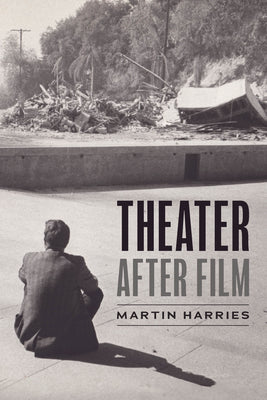
Theater After Film
Regular price
$34.72 USD
Regular price
$36.55 USD
Sale price
$34.72 USD
Unit price
per
You save $1.83 USD (5%)
In stock — Ships within 1–2 business days
Format
Print Book
Currently viewing
Paperback
$34.72 USD
$36.55 USD
Secure CheckoutYour data is protected
Fast U.S. ShippingShips within 1–2 business days
Authentic Titles100% Genuine Books
AlbakiReads Editorial Postwar drama in cinema’s cultural shadow
Postwar drama in cinema’s cultural shadow
Martin Harries examines how post-1945 theater confronted cinema’s dominance within mass culture. Framing the stage as a site where film’s cultural power could be exposed and contested, the book traces theatrical strategies including hyperbole and refusal without suggesting that theater could simply rival film’s reach. Critical theory and performance theory inform readings centered on Tennessee Williams, Samuel Beckett, and Adrienne Kennedy. Their work anchors discussions of spectatorship, race across film and theater, and the material apparatus of performance, placing major postwar dramatists within the changing media environment around them.
Good fit for readers who enjoy
- Students and scholars of postwar theater
- Readers interested in film and performance theory
- Those studying Tennessee Williams, Samuel Beckett, or Adrienne Kennedy
Themes
Theater and cinemaMass culturePostwar dramaSpectatorshipRace and performance
Based on publisher information and book metadata.
Book Overview A study of the impact of film and mass culture on drama after World War II. In Theater after Film, Martin Harries argues that after 1945,...
A study of the impact of film and mass culture on drama after World War II.
In Theater after Film, Martin Harries argues that after 1945, as cinema became omnipresent in popular culture, theater had to respond to cinema's hegemony. Theater couldn't break that hegemony, but it could provide a zone of contestation. Theater made film's domination of the cultural field visible through hyperbole, refusal, and other strategies, thereby unsettling its power. Postwar theatrical experiment, Harries shows, often channeled and represented film's mass cultural force, while knowing that it could never possess that force. Throughout the book, Harries brings critical theory into contact with theories of performance. Although Theater after Film treats the theatrical work of many figures, its central focus falls on Tennessee Williams, Samuel Beckett, and Adrienne Kennedy. Discussions of these dramatists consider their ways of addressing spectators, the politics of race between film and theater, and the place of the theatrical apparatus. Readings of these central figures in twentieth-century theater exemplify the book's historical engagement with the media surround that drama confronted. This confrontation, Harries shows, was central to the development of some of the most continually compelling postwar drama.
In Theater after Film, Martin Harries argues that after 1945, as cinema became omnipresent in popular culture, theater had to respond to cinema's hegemony. Theater couldn't break that hegemony, but it could provide a zone of contestation. Theater made film's domination of the cultural field visible through hyperbole, refusal, and other strategies, thereby unsettling its power. Postwar theatrical experiment, Harries shows, often channeled and represented film's mass cultural force, while knowing that it could never possess that force. Throughout the book, Harries brings critical theory into contact with theories of performance. Although Theater after Film treats the theatrical work of many figures, its central focus falls on Tennessee Williams, Samuel Beckett, and Adrienne Kennedy. Discussions of these dramatists consider their ways of addressing spectators, the politics of race between film and theater, and the place of the theatrical apparatus. Readings of these central figures in twentieth-century theater exemplify the book's historical engagement with the media surround that drama confronted. This confrontation, Harries shows, was central to the development of some of the most continually compelling postwar drama.
Book Details Format: Paperback | Pages: 304 | Language: English | Publisher: UNIV OF CHICAGO PR | ISBN: 0226838714
FormatPaperback
Pages304
LanguageEnglish
ISBN0226838714
EAN9780226838717
PublisherUNIV OF CHICAGO PR
Publication Date2025-05-23
Edition1
AccessoriesNo Accessory
ConditionNew
Product TypeQUALITY PAPERBACK BOOKS
Weight0.91 Pounds
Length9.0 Inches
Width6.0 Inches
Height0.69 Inches
Shipping & Returns Fast, reliable shipping and easy returns on eligible items.
Most orders ship within 1–2 business days with fast, reliable U.S. delivery.
Eligible items can be returned within 30 days in line with our store return policy.
Why shop with AlbakiReads
Fresh Inventory from Major Publishers
Sourced through trusted book distributors, with fresh titles added regularly.
Secure Checkout
Your payment information is encrypted and protected every step of the way.
Fast U.S. Shipping
Most orders ship within 1–2 business days.
Books for Every Kind of Reader
From page-turners to timeless classics—find your next favorite read.


