


Sonnets from the Voyage of the Beagle
Regular price
$19.63 USD
Regular price
$32.72 USD
Sale price
$19.63 USD
Unit price
per
You save $13.09 USD (40%)
In stock — Ships within 1–2 business days
Format
Print Book
Currently viewing
Paperback
$19.63 USD
$32.72 USD
Secure CheckoutYour data is protected
Fast U.S. ShippingShips within 1–2 business days
Authentic Titles100% Genuine Books

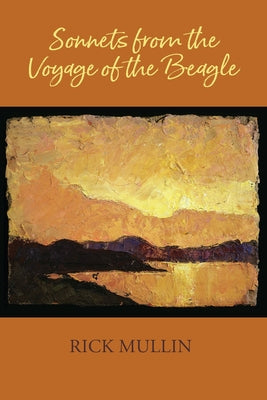
Book Overview Some years back, a person in New York City could visit an exhibit on Charles Darwin at the American Museum of Natural History. I saw noth...
Some years back, a person in New York City could visit an exhibit on Charles Darwin at the American Museum of Natural History. I saw nothing of "self song" at the Darwin exhibit. Still, I wondered. Wouldn't an innovator in the sciences be reflected in his or her insights just as the innovative painter or poet is reflected in his or her pictures or poems? Isn't experimentation, in a pure form, experience? I turned to Darwin's Romantic Period for answers.
Sonnets from the Voyage of the Beagle is not intended as a work of translation. Nor is it meant to relieve Charles Darwin of onerous weight of secular deity. He frees himself preemptively in his books, letters, and journals. What occurred to me would be interesting was a melding of poetry and scientific exploration in a volume of sonnets focused on the young Darwin's experience in nature during his great voyage of discovery. By writing sonnets in the voice of the author of The Voyage of the Beagle, I hoped to share in his formative ventures. I hoped also, as the writing got underway, to convey the conflict between evidence and revelation in the discernment of truth that would bring Darwin to a crisis of faith later in life, a crisis we have shared as a society in the West with no true resolution. Any prospect gained onto Darwin's nascent understanding of natural selection as the principium apparatus in the evolution of life on earth would be a bonus.
I chose the sonnet form for this book for several reasons. First, it is my favorite poetic form. It is also the form most readily built for conveying discovery. The 14-line poem, with its turn in the neighborhood of lines 8 and 9, seems sized perfectly as a short entry in a journal. I joked with friends that Darwin's paragraphs contain voltas, and, in fact, many of his accounts in The Beagle lend themselves to the logic of the form. While in some (very few) cases actual lines of Darwin's text are transferred to lines in sonnets, the poems are directed primarily by my own experience as a reader and writer.
Critical note: In most cases, I favor Darwin's spelling of proper nouns as they are given in my Everyman's Library edition (2003) of TheVoyage of The Beagle, many of which are at variance with current spellings-Fitz Roy, Buenos Ayres, and Colonia del Sacramiento are examples. In "A Visit from the Queen", I alter the pronunciation of the queen's name with a twist on Darwin's spelling, which allows me to save a rhyme that I find I cannot sacrifice. I take the usual liberties in writing a poetic account of history, but endeavor in all cases to follow Darwin's description of events and discoveries. Some readers will no doubt be shocked to find Darwin portrayed as a Christian endowed with the stock prejudices of a well-born, educated Englishman of the 1830s-a man who, for example, writes in support of missionaries when they are criticized by other writers of the day for imposing an oppressive Christian doctrine and discipline on the native people of Tahiti. To these readers, I would convey that Darwin's loss of Christian faith came later in life, informed by his study of nature, hinging on his family experience.
I hope a sympathetic reader of these sonnets finds in the lonely character of Charles Darwin, as I did, an exceptional-which is to say adventurous-scientist, open to nature and diligent in the pursuit of experience and truth. A man who challenged his own ideas, but, more importantly, challenged received scientific understanding in a true act of self-assertion. I hope, moreover, to present Darwin as a late figure in the Romantic Age of art and science at work in the field, moving toward the breakthrough he must have known would arrive. Rick Mullin
Book Details Format: Paperback | Pages: 155 | Language: English | Publisher: INDEPENDENT CAT | ISBN: 1939929229
FormatPaperback
Pages155
LanguageEnglish
ISBN1939929229
EAN9781939929228
PublisherINDEPENDENT CAT
Publication Date1970-01-01
AccessoriesNo Accessory
ConditionNew
Product TypeQUALITY PAPERBACK BOOKS
Weight0.85 Pounds
Length8.9 Inches
Width6.0 Inches
Height0.5 Inches
Shipping & Returns Fast, reliable shipping and easy returns on eligible items.
Most orders ship within 1–2 business days with fast, reliable U.S. delivery.
Eligible items can be returned within 30 days in line with our store return policy.
Why shop with AlbakiReads
Fresh Inventory from Major Publishers
Sourced through trusted book distributors, with fresh titles added regularly.
Secure Checkout
Your payment information is encrypted and protected every step of the way.
Fast U.S. Shipping
Most orders ship within 1–2 business days.
Books for Every Kind of Reader
From page-turners to timeless classics—find your next favorite read.


