Home › History › Slow Train to Arcadia: A History of Railway Commuting Into London

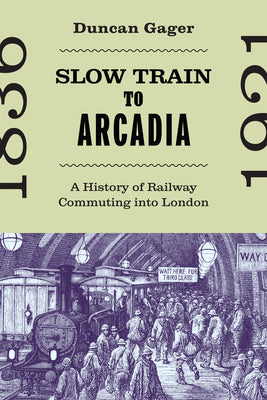
Slow Train to Arcadia: A History of Railway Commuting Into London

by Duncan Gager

How London’s railways made the daily commute

Regular price $40.42 USD
Regular price $47.56 USD Sale price $40.42 USD
Save 15%

Paperback New English

Delivery to your door
Currently unavailable
Secure checkout
American Express Apple Pay DiscoverGoogle Pay Mastercard PayPalVisa
30-day eligible returns Returns & refunds policy

AlbakiReads Editorial

How London’s railways made the daily commute

Duncan Gager traces London’s suburban railway network from the 1830s to 1921, placing the rise of commuting within the city’s physical expansion and changing working life. The book follows the interplay among government, railway companies, and passengers as rail travel made it possible for more people to live farther from central workplaces. It also examines the uneven terms of that access: efforts to broaden affordability did not erase divisions shaped by class and gender. By connecting transport policy, suburban growth, and everyday travel, the history frames commuting as a gradual social transformation rather than an automatic consequence of the railway age.

Good fit for readers who enjoy

  • Readers interested in London’s urban and suburban history
  • Railway-history enthusiasts
  • Those exploring the historical roots of commuting and workplace travel

Themes

London suburbanizationRailway commutingUrban mobilityClass and genderTransport policy

Based on publisher information and book metadata.

Book overview

Railway commuting is today a mundane and routine necessity, yet for the Victorians it was a novel experience. It opened up new possibilities of living at a remove from the crowded urban centre while staying connected to its places of work. Commuting helped transform London's urban landscape, as the compact city of Dickens's London gave way to the suburban sprawl of the British capital in the early twentieth century.

Slow Train to Arcadia is a history of London's suburban railway network from the 1830s to 1921 and its impact on urban mobility. The book charts the relationship between the three main actors in the formation of the suburban railway: the state, the railway companies, and the travelling public. While the railway age came quickly to Victorian Britain, commuting took a slower journey to commonplace status. In the 1840s William Gladstone sought to make railway travel accessible to all, but commuting was experienced differently according to class and gender. Slow Train to Arcadia explains why the democratization of commuting proved to be an elusive goal.

Today's workers are living through a fundamental reversal in the relationship between home and the workplace. For many, a daily commute is being consigned to history, a shift that will have long-term social and economic consequences. Slow Train to Arcadia is a timely exploration of the origins of mass commuting, a similarly transformative period for the daily patterns of working life.

Shipping & returnsShipping options, delivery timing, and our return policy.

In-stock items normally dispatch within 1–2 business days. The ZIP-code estimator on this page is informational only; the final shipping method, price, and availability are confirmed at checkout for your full order.

For the initial delivery estimate we use these transit windows after dispatch: Standard 5–8 business days, Expedited 2–4 business days, and Priority 1–2 business days. Holiday delays are not included.

Eligible items can be returned within 30 days in accordance with our return policy.

Customer reviews