


Book overview
In the 1920s and 30s, musicians from Latin America and the Caribbean were flocking to New York, lured by the burgeoning recording studios and lucrative entertainment venues. In the late 1940s and 50s, the big-band mambo dance scene at the famed Palladium Ballroom was the stuff of legend, while modern-day music history was being made as the masters of Afro-Cuban and jazz idiom conspired to create Cubop, the first incarnation of Latin jazz. Then, in the 1960s, as the Latino population came to exceed a million strong, a new generation of New York Latinos, mostly Puerto Ricans born and raised in the city, went on to create the music that came to be called salsa, which continues to enjoy avid popularity around the world. And now, the children of the mambo and salsa generation are contributing to the making of hip hop and reviving ancestral Afro-Caribbean forms like Cuban rumba, Puerto Rican bomba, and Dominican palo.
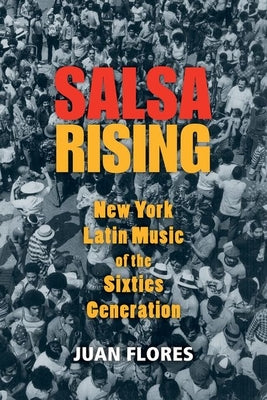
Salsa Rising provides the first full-length historical account of Latin Music in this city guided by close critical attention to issues of tradition and experimentation, authenticity and dilution, and the often clashing roles of cultural communities and the commercial recording industry in the shaping of musical practices and tastes. It is a history not only of the music, the changing styles and practices, the innovators, venues and songs, but also of the music as part of the larger social history, ranging from immigration and urban history, to the formation of communities, to issues of colonialism, race and class as they bear on and are revealed by the trajectory of the music. Author Juan Flores brings a wide range of people in the New York Latin music field into his work, including musicians, producers, arrangers, collectors, journalists, and lay and academic scholars, enriching Salsa Rising with a unique level of engagement with and interest in Latin American communities and musicians themselves.
Salsa Rising provides the first full-length historical account of Latin Music in this city guided by close critical attention to issues of tradition and experimentation, authenticity and dilution, and the often clashing roles of cultural communities and the commercial recording industry in the shaping of musical practices and tastes. It is a history not only of the music, the changing styles and practices, the innovators, venues and songs, but also of the music as part of the larger social history, ranging from immigration and urban history, to the formation of communities, to issues of colonialism, race and class as they bear on and are revealed by the trajectory of the music. Author Juan Flores brings a wide range of people in the New York Latin music field into his work, including musicians, producers, arrangers, collectors, journalists, and lay and academic scholars, enriching Salsa Rising with a unique level of engagement with and interest in Latin American communities and musicians themselves.


