Home › Genres & Styles › Postbop Jazz in the 1960s: The Compositions of Wayne Shorter, Herbie Hancock, and Chick Corea

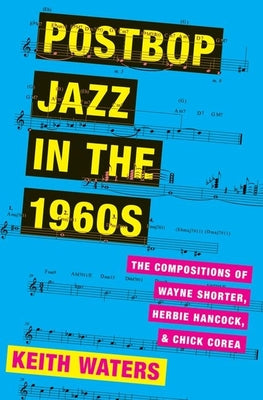
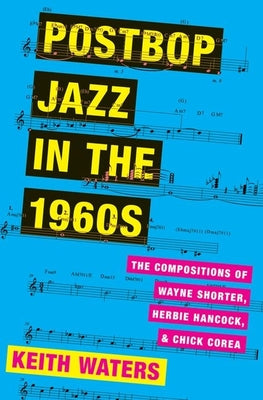
Postbop Jazz in the 1960s: The Compositions of Wayne Shorter, Herbie Hancock, and Chick Corea

by Keith Waters

A guide to the changing musical language of 1960s postbop

Regular price $45.08 USD
Regular price $47.46 USD Sale price $45.08 USD
Save 5%

Hardcover New English

Delivery to your door
In stock·Dispatches in 1–2 business days
Standard shipping* from $4.35
Standard shipping transit* 5–8 business days after dispatch

Faster options are available.

Rates and delivery estimates depend on your destination and item quantity. Estimates are informational only; the final shipping method and rate are selected at checkout.

Secure checkout
American Express Apple Pay DiscoverGoogle Pay Mastercard PayPalVisa
30-day eligible returns Returns & refunds policy

AlbakiReads Editorial

A guide to the changing musical language of 1960s postbop

Keith Waters examines how 1960s postbop composition moved beyond the single-key, 32-bar, and tonal frameworks common in earlier small-group jazz. Through close case studies of works by Wayne Shorter, Herbie Hancock, Chick Corea, and selected contemporaries including Jaki Byard Little, Joe Henderson, and Woody Shaw, the book traces developments in harmony, melody, and form. The analysis connects individual pieces to broader principles such as harmonic substitution and maps points of continuity and change between postbop and earlier tonal jazz practice. With its emphasis on compositional structure, it offers a focused lens on a pivotal decade in modern jazz.

Good fit for readers who enjoy

  • Jazz musicians and students interested in harmonic, melodic, and formal analysis
  • Listeners seeking a deeper understanding of 1960s postbop repertoire
  • Readers studying the compositions of Shorter, Hancock, Corea, Henderson, or Shaw

Themes

Postbop jazzJazz harmonyMusical formMelodic design1960s jazz composition

Based on publisher information and book metadata.

Book overview

Innovations in postbop jazz compositions of the 1960s occurred in several dimensions, including harmony, form, and melody. Postbop jazz composers such as Wayne Shorter, Herbie Hancock, and Chick Corea broke with earlier tonal jazz traditions. Their compositions marked a departure from the techniques of jazz standards and original compositions that defined small-group repertory through the 1950s: single-key orientation, schematic 32-bar frameworks (in AABA or ABAC forms), and tonal harmonic progressions. The book develops analytical pathways through a number of compositions, including "El Gaucho," "Penelope," "Pinocchio," "Face of the Deep" (Shorter); "King Cobra," "Dolphin Dance," "Jessica" (Hancock); "Windows," "Inner Space," "Song of the Wind" (Corea); as well as "We Speak" (Little); "Punjab" (Henderson); "Beyond All Limits" (Shaw). These case studies offer ways to understand their harmonic syntax, melodic and formal designs, and general principles of harmonic substitution. By locating points of contact among these postbop techniques-and by describing their evolution from previous tonal jazz practices-the book illustrates the syntactic changes that emerged during the 1960s.
Shipping & returnsShipping options, delivery timing, and our return policy.

In-stock items normally dispatch within 1–2 business days. The ZIP-code estimator on this page is informational only; the final shipping method, price, and availability are confirmed at checkout for your full order.

For the initial delivery estimate we use these transit windows after dispatch: Standard 5–8 business days, Expedited 2–4 business days, and Priority 1–2 business days. Holiday delays are not included.

Eligible items can be returned within 30 days in accordance with our return policy.

Customer reviews