


Book overview
A compelling biography of Mark Weiser, a pioneering innovator whose legacy looms over the tech industry's quest to connect everything--and who hoped for something better.
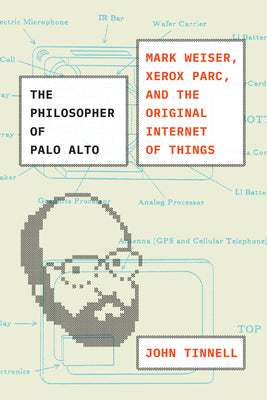
When developers and critics trace the roots of today's Internet of Things--our smart gadgets and smart cities--they may single out the same creative source: Mark Weiser (1952-99), the first chief technology officer at Xerox PARC and the so-called "father of ubiquitous computing." But Weiser, who died young at age 46 in 1999, would be heartbroken if he had lived to see the ways we use technology today. As John Tinnell shows in this thought-provoking narrative, Weiser was an outlier in Silicon Valley. A computer scientist whose first love was philosophy, he relished debates about the machine's ultimate purpose. Good technology, Weiser argued, should not mine our experiences for saleable data or demand our attention; rather, it should quietly boost our intuition as we move through the world.
Informed by deep archival research and interviews with Weiser's family and colleagues, The Philosopher of Palo Alto chronicles Weiser's struggle to initiate a new era of computing. Working in the shadows of the dot-com boom, Weiser and his collaborators made Xerox PARC headquarters the site of a grand experiment. Throughout the building, they embedded software into all sorts of objects--coffeepots, pens, energy systems, ID badges--imbuing them with interactive features. Their push to integrate the digital and the physical soon caught on. Microsoft's Bill Gates flagged Weiser's Scientific American article "The Computer for the 21st Century" as a must-read. Yet, as more tech leaders warmed to his vision, Weiser grew alarmed about where they wished to take it.
In this fascinating story of an innovator and a big idea, Tinnell crafts a poignant and critical history of today's Internet of Things. At the heart of the narrative is Weiser's desire for deeper connection, which animated his life and inspired his notion of what technology at its best could be.


