


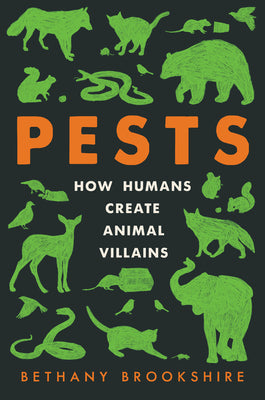
Book overview
An engrossing and revealing study of why we deem certain animals "pests" and others not--from cats to rats, elephants to pigeons--and what this tells us about our own perceptions, beliefs, and actions, as well as our place in the natural world
A squirrel in the garden. A rat in the wall. A pigeon on the street. Humans have spent so much of our history drawing a hard line between human spaces and wild places. When animals pop up where we don't expect or want them, we respond with fear, rage, or simple annoyance. It's no longer an animal. It's a pest.
At the intersection of science, history, and narrative journalism, Pests is not a simple call to look closer at our urban ecosystem. It's not a natural history of the animals we hate. Instead, this compelling book about animal behavior is about us. It's about what calling an animal a pest says about people, how we live, and what we want. It's a story about human nature, and how we categorize the animals in our midst, including bears and coyotes, sparrows and snakes. Pet or pest? In many cases, it's entirely a question of perspective.
Bethany Brookshire's deeply researched and entirely entertaining book will show readers what there is to venerate in vermin, and help them appreciate how these animals have clawed their way to success in an exploration of human-wildlife conflict. In the process, we will learn how the pests that annoy us tell us far more about humanity than they do about the animals themselves.
This work of narrative journalism explores the fascinating intersection of science, history, and culture to reveal:
- Human-Wildlife Conflict: From the author's personal war against a tomato-stealing squirrel named Kevin to farmers battling elephants, discover why these conflicts say more about us than the animals.
- The Science of Disgust: Uncover the psychological and biological roots of our revulsion toward animals like rats and snakes, and how these feelings have shaped human history.
- Shifting Cultural Perceptions: Learn how once-venerated animals like pigeons became "rats with wings," and why thousands of rats are worshipped in an Indian temple.
- Urban Ecosystems: Journey from the sewers of New York to the backyards of suburbia to understand how animals like coyotes and bears have adapted to thrive in human-dominated landscapes.


