Home › Hardcover Books › The Overseer Class: A Manifesto

The Overseer Class: A Manifesto

by Steven W. Thrasher

Visibility, power, and institutional compromise

Regular price $25.13 USD
Regular price $41.89 USD Sale price $25.13 USD
Save 40%

Hardcover New

Delivery to your door
In stock·Dispatches in 1–2 business days
Standard shipping* from $4.35
Standard shipping transit* 5–8 business days after dispatch

Faster options are available.

Rates and delivery estimates depend on your destination and item quantity. Estimates are informational only; the final shipping method and rate are selected at checkout.

Secure checkout
American Express Apple Pay DiscoverGoogle Pay Mastercard PayPalVisa
30-day eligible returns Returns & refunds policy

AlbakiReads Editorial

Visibility, power, and institutional compromise

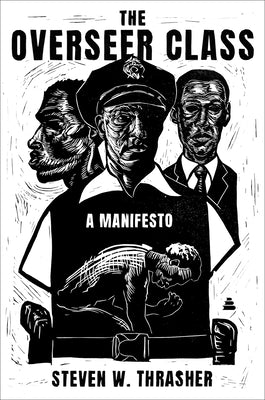
Steven W. Thrasher examines the position of people from historically minoritized groups who enter prominent roles within institutions shaped by segregation. The book uses the figure of the Black police officer to introduce a broader argument: representation in positions of authority can coexist with pressure to repress members of one’s own group. Its scope extends beyond law enforcement to mass media, universities, corporate America, the military, and government. Framing this arrangement as the “overseer class,” Thrasher considers how institutional power operates and offers a framework for challenging the dynamic he describes.

Good fit for readers who enjoy

  • Readers interested in race, representation, and power within U.S. institutions.
  • Readers exploring how institutions shape the roles and constraints of people from historically minoritized groups.

Themes

Representation and institutional powerRace and segregationComplicity and constraintInstitutional accountability

Based on publisher information and book metadata.

Book overview

The author of the critically acclaimed The Viral Underclass (one of Kirkus Reviews best books of 2022) is back with The Overseer Class, which explores what happens when members of historically minoritized groups are selected for high-visibility positions of power within existing institutions--but under the conditions of a kind of Faustian bargain.

Our society places so much weight and attention on those who become the first or only of their identifying group that we miss one of the inherent issues in that model. This book is about the kinds of compromises made by a small but influential group of people from minoritized groups in the United States as they have entered segregated institutions in highly visible positions. People in the overseer class wield enormous institutional power, even necropolitical power over who lives and who dies; it's just that their power is predicated upon repressing other people who look (or speak/have sex/come from places) like them.

The most obvious contemporary overseer is the Black police officer. The Overseer Class begins with this quote from James Baldwin from 1967:

"The poor, of whatever color, do not trust the law and certainly have no reason to, and God knows we didn't. 'If you must call a cop, ' we said in those days, 'for God's sake, make sure it's a white one.' We did not feel that the cops were protecting us, for we knew too much about the reasons for the kinds of crimes committed in the ghetto; but we feared black cops even more than white cops, because the black cop had to work so much harder--on your head--to prove to himself and his colleagues that he was not like all the other n******."

But this dynamic does not only exist within law enforcement, it exists in many different spheres and The Overseer Class explores what it looks like in mass media, universities, corporate America, the military, and government. The Overseer Class aims not only to educate us and start this discussion but to provide a framework for challenging that dynamic. It is a weighty topic but one that Dr. Thrasher is well-equipped to handle.

Shipping & returnsShipping options, delivery timing, and our return policy.

In-stock items normally dispatch within 1–2 business days. The ZIP-code estimator on this page is informational only; the final shipping method, price, and availability are confirmed at checkout for your full order.

For the initial delivery estimate we use these transit windows after dispatch: Standard 5–8 business days, Expedited 2–4 business days, and Priority 1–2 business days. Holiday delays are not included.

Eligible items can be returned within 30 days in accordance with our return policy.

Customer reviews