Home › Law › Not for Sale: Kelo V. New London and the Modern Debate Over Eminent Domain

Not for Sale: Kelo V. New London and the Modern Debate Over Eminent Domain

by Francine Sanders Romero

A neighborhood case with national consequences

Regular price $33.15 USD
Regular price $36.84 USD Sale price $33.15 USD
Save 10%

Paperback New

Format

Print BookAvailable Hardcover $116.66 USD
Print BookCurrently viewing Paperback $33.15 USD$36.84 USD
Delivery to your door
In stock·Dispatches in 1–2 business days
Standard shipping* from $4.35
Standard shipping transit* 5–8 business days after dispatch

Faster options are available.

Rates and delivery estimates depend on your destination and item quantity. Estimates are informational only; the final shipping method and rate are selected at checkout.

Secure checkout
American Express Apple Pay DiscoverGoogle Pay Mastercard PayPalVisa
30-day eligible returns Returns & refunds policy

AlbakiReads Editorial

A neighborhood case with national consequences

The Fort Trumbull dispute brings eminent domain into focus through both a local redevelopment fight and its wider legal and political aftermath. Francine Sanders Romero traces the challenge brought by Susette Kelo and other New London residents, the Supreme Court’s 2005 decision, and the backlash that followed, including state restrictions and a federal executive order. The account also sets competing arguments in view: property-rights concerns and the claim that cities need latitude to pursue economic development. The gap between the promised redevelopment and the project’s eventual failure gives the legal debate a concrete local dimension. The book frames Kelo as a landmark episode in recent legal history and examines its continuing place in debates over public use and private property.

Good fit for readers who enjoy

  • Readers interested in eminent domain, property rights, and legal history.
  • Readers following the relationship between urban redevelopment, local communities, and public policy.
  • Readers seeking an account that connects a Supreme Court case with its political aftermath.

Themes

Eminent domain and public useProperty rightsUrban redevelopmentLocal communities and corporationsLegal and political backlash

Based on publisher information and book metadata.

Book overview

The dramatic story of how a small neighborhood in Connecticut became the site and symbol of a political conflict over the use of eminent domain, mobilizing a national property rights movement.

In 2000, Susette Kelo and other residents of the Fort Trumbull neighborhood sued the city of New London, Connecticut. Two years earlier, the pharmaceutical giant Pfizer had built a facility adjacent to this area. Shortly thereafter, the city empowered the privately owned New London Development Corporation to use the power of eminent domain to implement a "comprehensive redevelopment plan" for the neighborhood. While the plaintiffs argued that economic development did not qualify as a valid "public use" under the Takings Clause of the Fifth Amendment, the Supreme Court decided in a controversial 2005 decision that the potential economic benefits of the plan justified the condemnation of private property as long as appropriate compensation was paid.

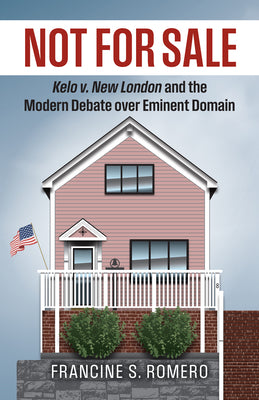
The Kelo decision implied that any town could transfer property to private developers on the grounds of possible future tax revenue and job creation, so long as that action was included in an economic development plan. The outrage over the decision unleashed a near-unanimous backlash, even resulting in an executive order from President George W. Bush instructing the federal government to limit the use of eminent domain. Numerous states passed ballot initiatives and legislation restricting eminent domain in the wake of the Kelo case. Despite this outcry, urban planners and others defended it as a necessary application of existing precedent that allowed cities flexibility to combat economic downturns. Lead plaintiff Susette Kelo and her pink house became a symbol of a growing national property rights movement and a deepening conflict between public officials and property owners, between large corporations and local communities. Perhaps most disastrously, after bulldozing the neighborhood the developer was unable to secure the necessary financing and abandoned the project, leaving empty lots where the plaintiffs' properties once stood. It would be many years before a feasible plan led to actual new construction and improvements.

Not for Sale recounts this iconic episode in recent legal history, giving full attention to both the human and legal elements of the story and offering a balanced consideration of each. The story remains as relevant as ever, especially since the Supreme Court has repeatedly refused to reconsider its decision, most recently in Bowers Development, LLC v. Oneida County Industrial Development Agency (2025).

Shipping & returnsShipping options, delivery timing, and our return policy.

In-stock items normally dispatch within 1–2 business days. The ZIP-code estimator on this page is informational only; the final shipping method, price, and availability are confirmed at checkout for your full order.

For the initial delivery estimate we use these transit windows after dispatch: Standard 5–8 business days, Expedited 2–4 business days, and Priority 1–2 business days. Holiday delays are not included.

Eligible items can be returned within 30 days in accordance with our return policy.

Customer reviews