Home › Genres & Styles › Making Music American: 1917 and the Transformation of Culture

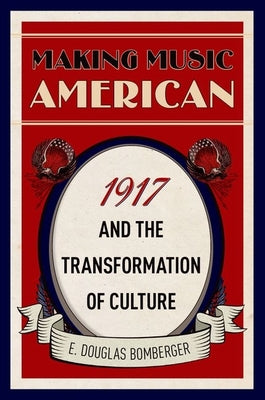
Making Music American: 1917 and the Transformation of Culture

by E. Douglas Bomberger

A Year When War, Jazz, and National Identity Reshaped American Music

Regular price $35.64 USD
Regular price $50.92 USD Sale price $35.64 USD
Save 30%

Hardcover New English

Delivery to your door
In stock·Dispatches in 1–2 business days
Standard shipping* from $4.35
Standard shipping transit* 5–8 business days after dispatch

Faster options are available.

Rates and delivery estimates depend on your destination and item quantity. Estimates are informational only; the final shipping method and rate are selected at checkout.

Secure checkout
American Express Apple Pay DiscoverGoogle Pay Mastercard PayPalVisa
30-day eligible returns Returns & refunds policy

AlbakiReads Editorial

A Year When War, Jazz, and National Identity Reshaped American Music

Organized month by month from New Year’s Eve 1916 through New Year’s Day 1918, this cultural history traces how World War I altered the American musical landscape. Bomberger brings together eight musicians working across jazz, military bands, concert music, and performance traditions associated with Europe, including Nick LaRocca, Freddie Keppard, James Reese Europe, Walter Damrosch, Karl Muck, Fritz Kreisler, Olga Samaroff, and Ernestine Schumann-Heink. Their intersecting careers frame a period in which jazz gained national prominence, patriotic expectations intensified, and German-linked artists faced public suspicion. The book uses 1917 as a focused lens on changing ideas about whose music could represent America and how musicians navigated the political pressures surrounding performance.

Good fit for readers who enjoy

  • Readers interested in American music during World War I
  • Jazz history readers seeking its early national emergence
  • Those interested in the relationship between culture, patriotism, and public suspicion

Themes

World War IJazz and American identityClassical music and German influencePatriotismMusicians under political pressure

Based on publisher information and book metadata.

Book overview

The year 1917 was unlike any other in American history, or in the history of American music. The United States entered World War I, jazz burst onto the national scene, and the German musicians who dominated classical music were forced from the stage. As the year progressed, New Orleans natives Nick LaRocca and Freddie Keppard popularized the new genre of jazz, a style that suited the frantic mood of the era. African-American bandleader James Reese Europe accepted the challenge of making the band of the Fifteenth New York Infantry into the best military band in the country. Orchestral conductors Walter Damrosch and Karl Muck met the public demand for classical music while also responding to new calls for patriotic music. Violinist Fritz Kreisler, pianist Olga Samaroff, and contralto Ernestine Schumann-Heink gave American audiences the best of Old-World musical traditions while walking a tightrope of suspicion because of their German sympathies. Before the end of the year, the careers of these eight musicians would be upended, and music in America would never be the same.

Making Music American recounts the musical events of this tumultuous year month by month from New Year's Eve 1916 to New Year's Day 1918. As the story unfolds, the lives of these eight musicians intersect in surprising ways, illuminating the transformation of American attitudes toward music both European and American. In this unsettled time, no one was safe from suspicion, but America's passion for music made the rewards high for those who could balance musical skill with diplomatic savvy.
Shipping & returnsShipping options, delivery timing, and our return policy.

In-stock items normally dispatch within 1–2 business days. The ZIP-code estimator on this page is informational only; the final shipping method, price, and availability are confirmed at checkout for your full order.

For the initial delivery estimate we use these transit windows after dispatch: Standard 5–8 business days, Expedited 2–4 business days, and Priority 1–2 business days. Holiday delays are not included.

Eligible items can be returned within 30 days in accordance with our return policy.

Customer reviews