Home › Computers › Inside the Enemy's Computer: Identifying Cyber Attackers

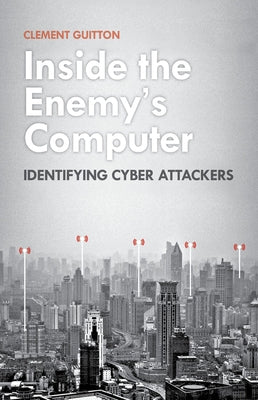
Inside the Enemy's Computer: Identifying Cyber Attackers

by Clement Guitton

Cyberattack attribution beyond the technical trace

Regular price $45.09 USD
Regular price $47.47 USD Sale price $45.09 USD
Save 5%

Hardcover New English

Delivery to your door
In stock·Dispatches in 1–2 business days
Standard shipping* from $4.35
Standard shipping transit* 5–8 business days after dispatch

Faster options are available.

Rates and delivery estimates depend on your destination and item quantity. Estimates are informational only; the final shipping method and rate are selected at checkout.

Secure checkout
American Express Apple Pay DiscoverGoogle Pay Mastercard PayPalVisa
30-day eligible returns Returns & refunds policy

AlbakiReads Editorial

Cyberattack attribution beyond the technical trace

Clement Guitton examines cyberattack attribution as a shifting legal and political process, not simply a matter of locating technical evidence. The book distinguishes between criminal investigations, where courts weigh evidence to establish guilt, and national-security decisions, where states interpret less reliable and often non-technical information to identify threats. Across both settings, it considers how judgment calls, evidentiary standards, timing, private-sector involvement, and plausible deniability shape efforts to assign responsibility. The emphasis is on the consequences of attribution: naming an attacker can influence whether an incident is treated as crime, warfare, or terrorism, while also reflecting institutional power and social norms.

Good fit for readers who enjoy

  • Students of cybersecurity policy and computer security
  • Readers interested in cybercrime, national security, and international conflict
  • Professionals examining evidence and responsibility in cyber incidents

Themes

Cyberattack attributionDigital forensics and evidenceCybercrime and national securityPolitical powerPlausible deniability

Based on publisher information and book metadata.

Book overview

Attribution - tracing those responsible for a cyber attack - is of primary importance when classifying it as a criminal act, an act of war, or an act of terrorism. Three assumptions dominate current thinking: attribution is a technical problem; it is unsolvable; and it is unique. Approaching attribution as a problem forces us to consider it either as solved or unsolved. Yet attribution is far more nuanced, and is best approached as a process in constant flux, driven by judicial and political pressures. In the criminal context, courts must assess the guilt of criminals, mainly based on technical evidence. In the national security context, decision-makers must analyse unreliable and mainly non-technical information in order to identify an enemy of the state. Attribution in both contexts is political: in criminal cases, laws reflect society's prevailing norms and powers; in national security cases, attribution reflects a state's will to maintain, increase or assert its power. However, both processes differ on many levels. The constraints, which reflect common aspects of many other political issues, constitute the structure of the book: the need for judgement calls, the role of private companies, the standards of evidence, the role of time, and the plausible deniability of attacks.
Shipping & returnsShipping options, delivery timing, and our return policy.

In-stock items normally dispatch within 1–2 business days. The ZIP-code estimator on this page is informational only; the final shipping method, price, and availability are confirmed at checkout for your full order.

For the initial delivery estimate we use these transit windows after dispatch: Standard 5–8 business days, Expedited 2–4 business days, and Priority 1–2 business days. Holiday delays are not included.

Eligible items can be returned within 30 days in accordance with our return policy.

Customer reviews