Home › Nature › How Indians Use Wild Plants for Food, Medicine & Crafts

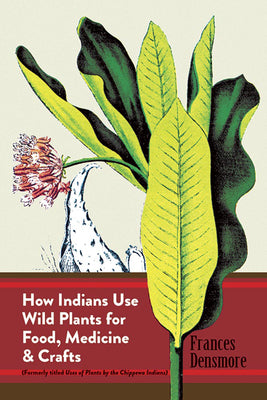
How Indians Use Wild Plants for Food, Medicine & Crafts

by Frances Densmore

A reference to Chippewa plant knowledge in the Great Lakes region

Regular price $12.72 USD
Regular price $21.21 USD Sale price $12.72 USD
Save 40%

Paperback New English

Delivery to your door
In stock·Dispatches in 1–2 business days
Standard shipping* from $4.35
Standard shipping transit* 5–8 business days after dispatch

Faster options are available.

Rates and delivery estimates depend on your destination and item quantity. Estimates are informational only; the final shipping method and rate are selected at checkout.

Secure checkout
American Express Apple Pay DiscoverGoogle Pay Mastercard PayPalVisa
30-day eligible returns Returns & refunds policy

AlbakiReads Editorial

A reference to Chippewa plant knowledge in the Great Lakes region

Frances Densmore organizes this ethnological study around the many roles plants held in Chippewa community life in Minnesota and Wisconsin. Separate sections address foodways, medicinal preparations, dyes, charms, and materials for household and decorative objects, while an extensive plant list records botanical names, parts used, preparation, administration, notes, and references. Detailed coverage includes maple sugar, wild rice, beverages, seasonings, fruits, vegetables, birch bark, and cedar. Thirty-six plates document stages of gathering and preparation as well as crafted objects. The book presents historical knowledge of natural materials and their uses; its discussion of medicines records the practices described in the study rather than offering contemporary medical guidance.

Good fit for readers who enjoy

  • Readers studying Chippewa and Great Lakes Indigenous ethnobotany
  • Natural-history readers interested in wild foods and plant materials
  • Crafters researching historical uses of birch bark, cedar, dyes, baskets, and twine

Themes

EthnobotanyChippewa traditionsWild foodsPlant-based craftsGreat Lakes region

Based on publisher information and book metadata.

Book overview

"Learn the natural ways of the Chippewa Indians with this great book from Dover." -- Texas Kitchen and Garden and More
The uses of plants -- for food, for medicine, for arts, crafts, and dyeing -- among the Chippewa Indians of Minnesota and Wisconsin show the great extent to which they understood and utilized natural resources. In this book those traditions are captured, providing a wealth of new material for those interested in natural food, natural cures, and native crafts.
In separate sections describing the major areas of use, Miss Densmore, an ethnologist with the Smithsonian Institution, details the uses of nearly 200 plants with emphasis on wild plants and lesser-known uses. For those interested in natural foods she gives extensive coverage to the gathering and preparation of maple sugar and wild rice, as well as preparations for beverages from leaves and twigs of common plants, seasonings including mint and bearberry, the methods of preparing wild rice and corn, cultivated and wild vegetables, and wild fruits and berries. On Indian medicines she tells the basic methods of gathering plants and the basic surgical and medical methods. Then she gives a complete list of the plants with their botanical names, uses, parts used, preparation and administration, and other notes and references. Also covered are plants used as charms, plants used in natural dyes, and plants in the useful and decorative arts including uses for household items, toys, mats, twine, baskets, bows, and tools, with special emphasis on the uses of birch bark and cedar. This section will be especially useful for supplying new and unusual craft ideas. In addition, 36 plates show the many stages of plant gathering and preparation and many of the artistic uses. While a number of the plants discussed are native only to the Great Lakes region, many are found throughout a wide range.
Those studying the Indians of the Great Lakes region, or those trying to get back to nature through understanding and using natural materials, will find much about the use of plants in all areas of community life. Because of Miss Densmore's deep knowledge and clear presentation, her study remains a rich and useful source for learning about or using native foods, native cures, and native crafts.

Shipping & returnsShipping options, delivery timing, and our return policy.

In-stock items normally dispatch within 1–2 business days. The ZIP-code estimator on this page is informational only; the final shipping method, price, and availability are confirmed at checkout for your full order.

For the initial delivery estimate we use these transit windows after dispatch: Standard 5–8 business days, Expedited 2–4 business days, and Priority 1–2 business days. Holiday delays are not included.

Eligible items can be returned within 30 days in accordance with our return policy.

Customer reviews