Home › Animals › Habitat, Population Dynamics, and Metal Levels in Colonial Waterbirds: A Food Chain Approach

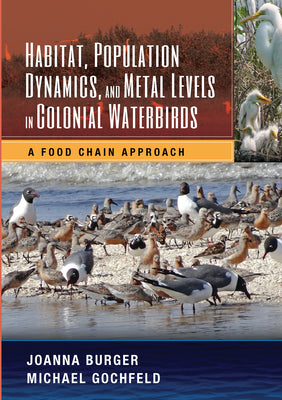
Habitat, Population Dynamics, and Metal Levels in Colonial Waterbirds: A Food Chain Approach

by Joanna Burger

Four decades of coastal waterbird and contamination research

Regular price $75.00 USD
Regular price $83.34 USD Sale price $75.00 USD
Save 10%

Paperback New English

Delivery to your door
In stock·Dispatches in 1–2 business days
Standard shipping* from $4.35
Standard shipping transit* 5–8 business days after dispatch

Faster options are available.

Rates and delivery estimates depend on your destination and item quantity. Estimates are informational only; the final shipping method and rate are selected at checkout.

Secure checkout
American Express Apple Pay DiscoverGoogle Pay Mastercard PayPalVisa
30-day eligible returns Returns & refunds policy

AlbakiReads Editorial

Four decades of coastal waterbird and contamination research

Drawing on more than 40 years of research in Barnegat Bay and nearby northeastern U.S. estuaries, Joanna Burger examines colonial waterbirds within a connected aquatic food web. The book brings together bird behavior, population dynamics, nesting-colony locations, habitat selection, prey contamination, and metal inputs to trace how heavy metals move from invertebrates and fish through birds and toward potential human exposure. Comparative material places these long-term findings alongside data from other Northeast bays, the Great Lakes, and the Wadden Sea. Stakeholder involvement is also part of the discussion, extending the study beyond wildlife monitoring to the practical questions raised by contaminants in coastal ecosystems.

Good fit for readers who enjoy

  • Ecologists and ornithologists interested in colonial waterbirds
  • Environmental scientists studying contaminants and aquatic food webs
  • Readers researching northeastern U.S. estuaries and long-term ecological data

Themes

Colonial waterbirdsHeavy-metal contaminationAquatic food websPopulation dynamicsCoastal estuaries

Based on publisher information and book metadata.

Book overview

This book is a result of the authors' more than 40 years of study on the behavior, populations, and heavy metals in the colonial waterbirds nesting in Barnegat Bay and the nearby estuaries and bays in the Northeastern United States. From Boston Harbor to the Chesapeake, based on longitudinal studies of colonial waterbirds, it provides a clear picture of the toxic trends and effects of heavy metals in the aquatic environment. The authors take a food web, ecosystem approach to contaminants, using population dynamics, habitat selection, and inputs to the bay to examine metal levels. They also look at the human dimension, discuss what metals in birds tell us about human exposure, and describe stakeholder involvement in these issues.


The book covers numbers and dynamics, colony sites and locations, and prey contaminant levels, and compares them to other comparable coastal estuaries. It uses colonial waterbirds as the focal point for an ecosystem approach to metals that begins with prey fish and goes through invertebrates to humans. Additionally, it provides information based on long-term integrative studies the authors have done on metal levels and bird species and compares the findings with data from the Harbor Estuaries Program, other Northeast bays, the Great Lakes, and the Wadden Sea.

Shipping & returnsShipping options, delivery timing, and our return policy.

In-stock items normally dispatch within 1–2 business days. The ZIP-code estimator on this page is informational only; the final shipping method, price, and availability are confirmed at checkout for your full order.

For the initial delivery estimate we use these transit windows after dispatch: Standard 5–8 business days, Expedited 2–4 business days, and Priority 1–2 business days. Holiday delays are not included.

Eligible items can be returned within 30 days in accordance with our return policy.

Customer reviews