Home › English, Irish, Scottish, Welsh › Guilty Creatures: Renaissance Poetry and the Ethics of Authorship

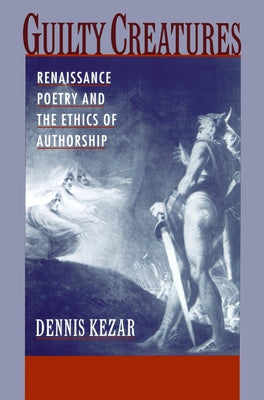
Guilty Creatures: Renaissance Poetry and the Ethics of Authorship

by Dennis Kezar

Violence, representation, and responsibility in Renaissance writing

Regular price $34.71 USD
Regular price $36.54 USD Sale price $34.71 USD
Save 5%

Paperback New English

Delivery to your door
In stock·Dispatches in 1–2 business days
Standard shipping* from $4.35
Standard shipping transit* 5–8 business days after dispatch

Faster options are available.

Rates and delivery estimates depend on your destination and item quantity. Estimates are informational only; the final shipping method and rate are selected at checkout.

Secure checkout
American Express Apple Pay DiscoverGoogle Pay Mastercard PayPalVisa
30-day eligible returns Returns & refunds policy

AlbakiReads Editorial

Violence, representation, and responsibility in Renaissance writing

Dennis Kezar studies how Renaissance writers treated acts of killing not only as narrative material but also as an ethical problem of representation. Through close readings of works by Skelton, Spenser, Shakespeare, Milton, and the authors of The Witch of Edmonton, the book considers authorial guilt, accountability, and the imagined role of the audience when poetry and drama depict violence. Its argument connects individual texts to the social, literary, and historical stakes of early modern “killing poems,” engaging historicist and speech-act approaches to the period.

Good fit for readers who enjoy

  • Students and scholars of Renaissance and early modern literature
  • Readers interested in literary ethics and representations of violence
  • Those studying historicist or speech-act approaches to literary criticism

Themes

Renaissance poetry and dramaViolence and representationAuthorship and accountabilityAudience interpretationEarly modern literary theory

Based on publisher information and book metadata.

Book overview

This study examines how Renaissance poets conceive the theme of killing as a specifically representational and interpretive form of violence. Closely reading both major poets and lesser known authors, Dennis Kezar explores the ethical self-consciousness and accountability that attend literary killing, paying particular attention to the ways in which this reflection indicates the poet's understanding of his audience. Kezar explores the concept of authorial guilt elicited by violent representation in poems including Skelton's Phyllyp Sparowe, Spenser's Faerie Queene, Shakespeare's Julius Caesar, the multi-authored Witch of Edmonton, and Milton's Samson Agonistes. In each case, he reflects on the poetic process and explores the ethical ramifications for both author and audience. In emphasizing the social, literary, and historical consequences of 'killing poems, ' this volume further advances scholarship in historicist and speech-act theories of the early modern period.
Shipping & returnsShipping options, delivery timing, and our return policy.

In-stock items normally dispatch within 1–2 business days. The ZIP-code estimator on this page is informational only; the final shipping method, price, and availability are confirmed at checkout for your full order.

For the initial delivery estimate we use these transit windows after dispatch: Standard 5–8 business days, Expedited 2–4 business days, and Priority 1–2 business days. Holiday delays are not included.

Eligible items can be returned within 30 days in accordance with our return policy.

Customer reviews