


The Enlightenment in America
Regular price
$156.29 USD
Regular price
$156.29 USD
Sale price
$156.29 USD
Unit price
per
In stock — Ships within 1–2 business days
Format
Print Book
Currently viewing
Paperback
$156.29 USD
Secure CheckoutYour data is protected
Fast U.S. ShippingShips within 1–2 business days
Authentic Titles100% Genuine Books
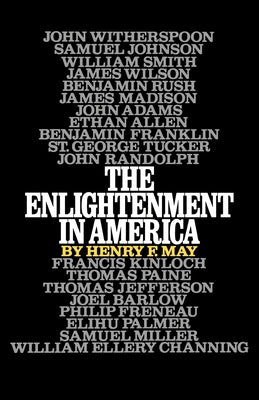
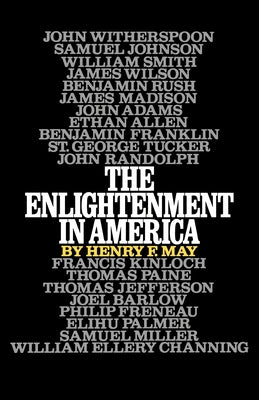
Book Overview It has long been taken for granted that the ideas of the European Enlightenment - of men like Locke, Hume, Voltaire, or Rousseau - profou...
It has long been taken for granted that the ideas of the European Enlightenment - of men like Locke, Hume, Voltaire, or Rousseau - profoundly affected America during the Revolutionary age. Yet there has been no full-length analysis of the movement of ideas from Europe to America in the late 18th century. Now one of American's leading intellectual historians has written a magisterial book that fills the gap.
May defines the Enlightenment broadly. Men of the Enlightenment were all those who believed that their own age was more enlightened than the past and that man and nature are best understood through the use of natural faculties. He treats the Enlightenment as a 'religion', even though many of its leading proponents opposed organized religion. Throughout the book he relates the Enlightenment to Protestant Christianity, for it is out of the clashes and reconciliations between those two systems that 19th-century American culture - a culture that lasted almost to our own time--took shape.
Defined so broadly, the religion of Enlightenment obviously included many different kinds of people - deists and skeptics and liberal Christians, aristocrats and democrats, conservatives and revolutionaries. May divides the European Enlightenment into four major categories, and shows how each had a different effect in America.
Obviously some ideas could be transmitted more easily than others to a society overwhelmingly Protestant and rapidly becoming democratic. May shows how the Enlightenment affected the thoughts and actions of major figures like Jefferson, Franklin, and John Adams, but these familiar figures are treated against a background of less well-known people - doctors and ministers, scientists and planters and politicians.
Beginning with the movement of relatively conservative British Enlightened ideas to America before the Revolution, May moves on to the transmission of the skeptical thought of men like Voltaire and Hume, and the revolutionary prophesies and programs of Rousseau, Condorcet, and Paine. The climax of the book comes in the 1790s, when radical Enlightened ideas clashed head-on with New England's religious and social traditions. The last part of the book shows how some aspects of the European Enlightenment were assimilated and others rejected by the American society of the 19th century.
May defines the Enlightenment broadly. Men of the Enlightenment were all those who believed that their own age was more enlightened than the past and that man and nature are best understood through the use of natural faculties. He treats the Enlightenment as a 'religion', even though many of its leading proponents opposed organized religion. Throughout the book he relates the Enlightenment to Protestant Christianity, for it is out of the clashes and reconciliations between those two systems that 19th-century American culture - a culture that lasted almost to our own time--took shape.
Defined so broadly, the religion of Enlightenment obviously included many different kinds of people - deists and skeptics and liberal Christians, aristocrats and democrats, conservatives and revolutionaries. May divides the European Enlightenment into four major categories, and shows how each had a different effect in America.
Obviously some ideas could be transmitted more easily than others to a society overwhelmingly Protestant and rapidly becoming democratic. May shows how the Enlightenment affected the thoughts and actions of major figures like Jefferson, Franklin, and John Adams, but these familiar figures are treated against a background of less well-known people - doctors and ministers, scientists and planters and politicians.
Beginning with the movement of relatively conservative British Enlightened ideas to America before the Revolution, May moves on to the transmission of the skeptical thought of men like Voltaire and Hume, and the revolutionary prophesies and programs of Rousseau, Condorcet, and Paine. The climax of the book comes in the 1790s, when radical Enlightened ideas clashed head-on with New England's religious and social traditions. The last part of the book shows how some aspects of the European Enlightenment were assimilated and others rejected by the American society of the 19th century.
Book Details Format: Paperback | Pages: 448 | Language: English | Publisher: OXFORD UNIV PR | ISBN: 0195023676
FormatPaperback
Pages448
LanguageEnglish
ISBN0195023676
EAN9780195023671
PublisherOXFORD UNIV PR
Publication Date1970-01-01
EditionRevised
AccessoriesNo Accessory
ConditionNew
Product TypeQUALITY PAPERBACK BOOKS
Weight1.19 Pounds
Length8.58 Inches
Width5.46 Inches
Height1.15 Inches
Shipping & Returns Fast, reliable shipping and easy returns on eligible items.
Most orders ship within 1–2 business days with fast, reliable U.S. delivery.
Eligible items can be returned within 30 days in line with our store return policy.
Why shop with AlbakiReads
Fresh Inventory from Major Publishers
Sourced through trusted book distributors, with fresh titles added regularly.
Secure Checkout
Your payment information is encrypted and protected every step of the way.
Fast U.S. Shipping
Most orders ship within 1–2 business days.
Books for Every Kind of Reader
From page-turners to timeless classics—find your next favorite read.


