Home › Organized Crime › Dangerous Rhythms: Jazz and the Underworld

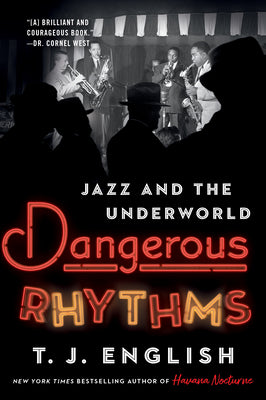
Dangerous Rhythms: Jazz and the Underworld

by T. J. English

Jazz, organized crime, and unequal power

Regular price $19.57 USD
Regular price $32.62 USD Sale price $19.57 USD
Save 40%

Paperback New English

Delivery to your door
In stock·Dispatches in 1–2 business days
Standard shipping* from $4.35
Standard shipping transit* 5–8 business days after dispatch

Faster options are available.

Rates and delivery estimates depend on your destination and item quantity. Estimates are informational only; the final shipping method and rate are selected at checkout.

Secure checkout
American Express Apple Pay DiscoverGoogle Pay Mastercard PayPalVisa
30-day eligible returns Returns & refunds policy

Awards & Recognition

  • Author recognition

    Author of a New York Times bestseller

    The metadata describes T. J. English as a New York Times bestselling author, referring to his book Havana Noctur...

AlbakiReads Editorial

Jazz, organized crime, and unequal power

T. J. English connects the growth of jazz in twentieth-century America to the mob-controlled clubs and vice districts that provided stages for many prominent Black musicians. The book sets that practical opportunity against the racial imbalance built into the arrangement: musicians performed in venues largely owned and controlled by white men. Artists differed over whether mob protection offered greater security and fairer pay, or whether working beyond that system offered more control over their careers. With figures ranging from Louis Armstrong and Billie Holiday to Al Capone and Lucky Luciano, the account frames jazz’s relationship with organized crime as both a history of access and a struggle over who held power.

Good fit for readers who enjoy

  • Readers interested in the history of jazz and its major performers
  • Those exploring organized crime’s role in American cultural life
  • Readers interested in race, ownership, and artists’ control over their careers

Themes

Jazz and organized crimeRacial inequity and ownershipArtist autonomy and protectionTwentieth-century American vice districtsThe Civil Rights movement

Based on publisher information and book metadata.

Book overview

From T. J. English, the New York Times bestselling author of Havana Nocturne, comes the epic, scintillating narrative of the interconnected worlds of jazz and organized crime in 20th century America.

"[A] brilliant and courageous book." --Dr. Cornel West

Dangerous Rhythms tells the symbiotic story of jazz and the underworld: a relationship fostered in some of 20th century America's most notorious vice districts. For the first half of the century mobsters and musicians enjoyed a mutually beneficial partnership. By offering artists like Louis Armstrong, Earl "Fatha" Hines, Fats Waller, Duke Ellington, Billie Holiday, Lena Horne, and Ella Fitzgerald a stage, the mob, including major players Al Capone, Meyer Lansky, and Charlie "Lucky" Luciano, provided opportunities that would not otherwise have existed.

Even so, at the heart of this relationship was a festering racial inequity. The musicians were mostly African American, and the clubs and means of production were owned by white men. It was a glorified plantation system that, over time, would find itself out of tune with an emerging Civil Rights movement. Some artists, including Louis Armstrong, believed they were safer and more likely to be paid fairly if they worked in "protected" joints. Others believed that playing in venues outside mob rule would make it easier to have control over their careers.

Through English's voluminous research and keen narrative skills, Dangerous Rhythms reveals this deeply fascinating slice of American history in all its sordid glory.


But was this partnership a golden opportunity or a gilded cage?


  • Mobsters and Musicians: Discover how mobsters like Al Capone and Lucky Luciano gave stage time to legends like Louis Armstrong and Duke Ellington, creating opportunities that wouldn't have otherwise existed.
  • Racial Inequity: Uncover the festering inequity at the heart of the partnership--a glorified plantation system where Black musicians performed in clubs owned and controlled by white men.
  • Prohibition Era Speakeasies: Explore the vice districts and mob-run speakeasies from New Orleans to Chicago that became the proving grounds for America's most iconic art form.
  • The Civil Rights Collision: Witness how the relationship became out of tune with an emerging Civil Rights movement, forcing artists to choose between mob protection and control over their own careers.
Shipping & returnsShipping options, delivery timing, and our return policy.

In-stock items normally dispatch within 1–2 business days. The ZIP-code estimator on this page is informational only; the final shipping method, price, and availability are confirmed at checkout for your full order.

For the initial delivery estimate we use these transit windows after dispatch: Standard 5–8 business days, Expedited 2–4 business days, and Priority 1–2 business days. Holiday delays are not included.

Eligible items can be returned within 30 days in accordance with our return policy.

Customer reviews