Home › Family & Relationships › Choice Theory: A New Psychology of Personal Freedom

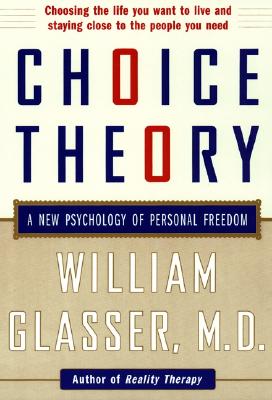
Choice Theory: A New Psychology of Personal Freedom

by William Glasser

A relationship-centered case for personal choice and responsibility

Regular price $17.69 USD
Regular price $29.49 USD Sale price $17.69 USD
Save 40%

Paperback New English

Delivery to your door
In stock·Dispatches in 1–2 business days
Standard shipping* from $4.35
Standard shipping transit* 5–8 business days after dispatch

Faster options are available.

Rates and delivery estimates depend on your destination and item quantity. Estimates are informational only; the final shipping method and rate are selected at checkout.

Secure checkout
American Express Apple Pay DiscoverGoogle Pay Mastercard PayPalVisa
30-day eligible returns Returns & refunds policy

AlbakiReads Editorial

A relationship-centered case for personal choice and responsibility

William Glasser presents Choice Theory as an alternative to what he calls “external control psychology,” arguing that punishment and attempts to control others damage relationships. The book frames unhappiness primarily through present-day unsatisfying relationships, shifting attention away from changing the past and toward choices made now. Its central concern is interpersonal conflict: how people relate to one another, where control enters those dynamics, and what personal freedom can mean within them. The perspective is explicitly prescriptive, offering a psychological framework for reconsidering conflict, responsibility, and connection in everyday relationships.

Good fit for readers who enjoy

  • Adults interested in relationship-focused self-help frameworks
  • Readers exploring personal responsibility and interpersonal conflict
  • Parents and family members considering approaches to teen and family relationships

Themes

Personal freedomRelationshipsControl and conflictPresent-focused changeResponsibility

Based on publisher information and book metadata.

Book overview

Dr. William Glasser offers a new psychology that, if practiced, could reverse our widespread inability to get along with one another, an inability that is the source of almost all unhappiness.
For progress in human relationships, he explains that we must give up the punishing, relationship–destroying external control psychology. For example, if you are in an unhappy relationship right now, he proposes that one or both of you could be using external control psychology on the other. He goes further. And suggests that misery is always related to a current unsatisfying relationship. Contrary to what you may believe, your troubles are always now, never in the past. No one can change what happened yesterday.
Shipping & returnsShipping options, delivery timing, and our return policy.

In-stock items normally dispatch within 1–2 business days. The ZIP-code estimator on this page is informational only; the final shipping method, price, and availability are confirmed at checkout for your full order.

For the initial delivery estimate we use these transit windows after dispatch: Standard 5–8 business days, Expedited 2–4 business days, and Priority 1–2 business days. Holiday delays are not included.

Eligible items can be returned within 30 days in accordance with our return policy.

Customer reviews