


The Boston Way: Radicals Against Slavery and the Civil War
Regular price
$23.51 USD
Regular price
$39.19 USD
Sale price
$23.51 USD
Unit price
per
You save $15.68 USD (40%)
In stock — Ships within 1–2 business days
Format
Print Book
Currently viewing
Hardcover
$23.51 USD
$39.19 USD
Secure CheckoutYour data is protected
Fast U.S. ShippingShips within 1–2 business days
Authentic Titles100% Genuine Books
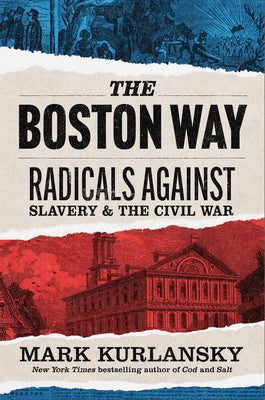
Book Overview "Engrossing"--Wall Street JournalHow do good people find the courage to resist and end the greatest evil in their country? An untold stor...
"Engrossing"--Wall Street Journal
How do good people find the courage to resist and end the greatest evil in their country? An untold story of the Civil War Era: pacifists in Boston who led the fight to end slavery without violence and war.
Has there ever been good violence or a good war? The American Civil War is likely considered to be so since there seemed to be no alternative. Or was there? Before the war, Bostonian abolitionist William Lloyd Garrison correctly predicted that fighting would not bring about real freedom and justice. If emancipation came about through violence, he believed, it would take at least a century for Black people to get their rights. As we now know, it has taken even longer than that.
Here is the story of Garrison and other abolitionists, Black and white, male and female, who advocated a peaceful end to slavery and the start of human rights for Black people. The Boston Clique, as they were called, were victorious in persuading their fellow Bostonians to end Jim Crow laws on Massachusetts' railroads. Persuasion was, these pacificists believed, the only means to lasting change.
In these pages, we find Frederick Douglass and lesser-known Black abolitionists, William Nell and Charles Remond. We meet leading feminists of the nineteenth century Lydia Maria Child, Margaret Fuller, Susan B. Anthony, and Elizabeth Cady Stanton. Additional key figures include Adin Balou, William Ladd, and Noah Worcester whose voices for nonviolence impacted Leo Tolstoy, Gandhi, and Dr. Martin Luther King.
Still, if it meant a faster end to the horrors of slavery, wasn't violence the answer? In time, pacificist abolitionists such as Douglass and John Brown came to believe the entire system in the South needed to be overthrown and that could only happen through the shedding of blood. Time may now provide a different perspective.
While history has little memory of abolitionists, and even less for pacifists, nothing can be learned from that which is not remembered. What if the Civil War had never have been fought? Might we now live in a world of far greater justice and peace? What does this mean today as we still pursue "righteous" violence? This is the story of a road not taken.
Book Details Format: Hardcover | Pages: 240 | Language: English | Publisher: DAVID R GODINE PUBL | ISBN: 1567927653
FormatHardcover
Pages240
LanguageEnglish
ISBN1567927653
EAN9781567927658
PublisherDAVID R GODINE PUBL
Publication Date1970-01-01
AccessoriesNo Accessory
ConditionNew
Product TypeHARD COVER BOOKS
Weight0.97 Pounds
Length8.35 Inches
Width5.59 Inches
Height1.1 Inches
Shipping & Returns Fast, reliable shipping and easy returns on eligible items.
Most orders ship within 1–2 business days with fast, reliable U.S. delivery.
Eligible items can be returned within 30 days in line with our store return policy.
Why shop with AlbakiReads
Fresh Inventory from Major Publishers
Sourced through trusted book distributors, with fresh titles added regularly.
Secure Checkout
Your payment information is encrypted and protected every step of the way.
Fast U.S. Shipping
Most orders ship within 1–2 business days.
Books for Every Kind of Reader
From page-turners to timeless classics—find your next favorite read.


