Home › Cognitive Psychology & Cognition › Biomechanics and Motor Control: Defining Central Concepts

Biomechanics and Motor Control: Defining Central Concepts

by Mark L. Latash

A concept-focused map of biomechanics and motor control

Regular price $93.54 USD
Regular price $93.54 USD Sale price $93.54 USD

Hardcover New English

Delivery to your door
In stock·Dispatches in 1–2 business days
Standard shipping* from $4.35
Standard shipping transit* 5–8 business days after dispatch

Faster options are available.

Rates and delivery estimates depend on your destination and item quantity. Estimates are informational only; the final shipping method and rate are selected at checkout.

Secure checkout
American Express Apple Pay DiscoverGoogle Pay Mastercard PayPalVisa
30-day eligible returns Returns & refunds policy

AlbakiReads Editorial

A concept-focused map of biomechanics and motor control

Mark L. Latash organizes this volume around the terminology that connects human movement research across biomechanics, neurophysiology, motor behavior, rehabilitation, robotics, and engineering. Its four-part structure moves from mechanical ideas—such as joint torque, stiffness, damping, impedance, work, and energy—to motor-control concepts including reflexes, muscle tone, efferent copy, motor programs, synergies, and the equilibrium-point hypothesis. Smaller terms are situated within broader frameworks, so related ideas can be considered together rather than as isolated definitions. Alongside defining major concepts, the book traces the research context that shaped their use, making it a reference-oriented examination of how central vocabulary functions across the field.

Good fit for readers who enjoy

  • Students building a foundation in human-movement biomechanics and motor control
  • Researchers needing conceptual context for commonly used motor-control terminology
  • Practitioners and scholars working across rehabilitation, robotics, engineering, psychology, or physical therapy

Themes

Human movement biomechanicsMotor controlNeurophysiologyResearch terminologyPosture and prehension

Based on publisher information and book metadata.

Book overview

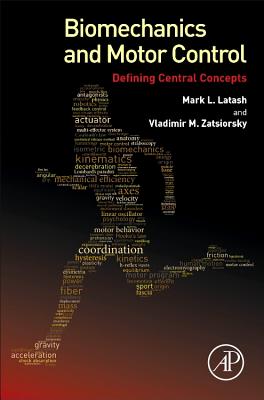
Biomechanics and Motor Control: Defining Central Concepts provides a thorough update to the rapidly evolving fields of biomechanics of human motion and motor control with research published in biology, psychology, physics, medicine, physical therapy, robotics, and engineering consistently breaking new ground.

This book clarifies the meaning of the most frequently used terms, and consists of four parts, with part one covering biomechanical concepts, including joint torques, stiffness and stiffness-like measures, viscosity, damping and impedance, and mechanical work and energy. Other sections deal with neurophysiological concepts used in motor control, such as muscle tone, reflex, pre-programmed reactions, efferent copy, and central pattern generator, and central motor control concepts, including redundancy and abundance, synergy, equilibrium-point hypothesis, and motor program, and posture and prehension from the field of motor behavior.

The book is organized to cover smaller concepts within the context of larger concepts. For example, internal models are covered in the chapter on motor programs. Major concepts are not only defined, but given context as to how research came to use the term in this manner.

Shipping & returnsShipping options, delivery timing, and our return policy.

In-stock items normally dispatch within 1–2 business days. The ZIP-code estimator on this page is informational only; the final shipping method, price, and availability are confirmed at checkout for your full order.

For the initial delivery estimate we use these transit windows after dispatch: Standard 5–8 business days, Expedited 2–4 business days, and Priority 1–2 business days. Holiday delays are not included.

Eligible items can be returned within 30 days in accordance with our return policy.

Customer reviews